
Local payment methods are no longer optional for iGaming operators, they're a competitive necessity. Primer changes how you handle this by giving you access to dozens of local alternative payment methods (APMs) without rebuilding your payment stack each time.
In this article, we'll look at the different approaches to adding these methods and why a unified payment infrastructure is the fastest path to global scale.
Why local payment methods matter in iGaming
Player preference varies sharply by market, and offering a generic card-only checkout is a recipe for high churn. In Brazil, players expect Pix, in Canada, it's Interac, and in the Philippines, GCash dominates the landscape.
Deposit failure rates increase when preferred methods aren't available because players don't want to navigate unfamiliar flows or deal with international transaction blocks. You risk losing players at checkout to competitors with better local coverage simply because they made it easier to move money.
The problem: integration complexity
One-by-one integrations with local Payment Service Providers (PSPs) are slow, expensive, and resource-heavy. Each new market brings fresh compliance, currency, and tech requirements that drain your engineering bandwidth.
Internal dev teams often get bottlenecked maintaining multiple APIs, leaving less time for actual product improvements. When every new country requires a three-month engineering project, your growth strategy becomes limited by your technical capacity.
Three approaches to adding local payment methods
Three approaches to adding local payment methods
Manually adding new payment methods (direct or via new PSPs)
You can choose to integrate each method or PSP individually as you enter new markets. This gives you full control over each relationship and contract, but it quickly becomes unmanageable at scale.
Each integration requires dev time, testing, and ongoing maintenance to prevent payment failures. Compliance and reporting must be handled separately per provider, which is a significant operational burden. This works for operators in one or two markets, but it breaks down fast beyond that.
Payment aggregators
A single contract and API unlocks a broad library of APMs, e-wallets, and local bank transfers. The PSP often handles compliance, currency conversion, and reconciliation on your behalf.
This is faster to deploy than manual integrations, but you're still locked into one provider's coverage and terms. You'll have less flexibility to optimize your payment routing or switch providers if performance drops in a specific region.
Payment orchestration
Orchestration connects multiple PSPs and APMs through a single layer, with no repeated integration work needed from your team. You can add or remove payment methods via a dashboard without touching backend code.
Dynamic routing automatically directs transactions based on geography, cost, or success rate to ensure the highest performance. Built-in fallback logic keeps authorization rates high if a provider fails, and the system scales cleanly across markets without growing your engineering burden.
Why payment orchestration is the best option for iGaming operators
Orchestration lets you enter new markets in days and makes you no longer dependent on a single provider. If a PSP underperforms or loses a license in a jurisdiction, you can reroute traffic automatically.
This approach reduces your compliance surface area by centralizing reporting and risk tooling in one place. It frees up internal dev resources for your core product rather than payment plumbing. Most importantly, authorization rate optimization becomes ongoing and automatic rather than a one-time manual setup.
What payment methods should iGaming operators actually add?
More options don't automatically mean more conversions because relevance matters more than volume.
"It's not the number of payment methods that truly matters—it's how relevant the methods are to a particular target audience and whether you provide a positive payment experience." Christophe Smol, Product Lead – Acceptance at Primer
Start with your conversion data. If you're already at 95% or higher in a market, a new method will move the needle very little. If conversion is lagging in a specific region, that's your signal to investigate local preferences rather than adding everything at once.
Geographic and cultural factors should drive your shortlist, such as iDEAL, which is gradually transitioning to Wero in the Netherlands, Pix in Brazil, or GCash in the Philippines. Consider player behavior in iGaming specifically, as deposit frequency, session context, and device type all affect which methods players will actually use.
Don't assume digital wallets are interchangeable, as adoption varies significantly by market and demographic. You should test and iterate regularly, because the real impact of a new payment method only becomes clear post-launch. Having the ability to enable and disable methods quickly is essential for a successful strategy.
Read more: How to optimize your checkout: a complete guide
Why use Primer
Primer's infrastructure approach lets you connect once and access multiple APMs and PSPs through a single integration. You can activate local payment methods via the dashboard with no backend dev work required.
- Improve authorization rates with native features. Dynamic routing and fallback logic are built in to ensure player deposits land.
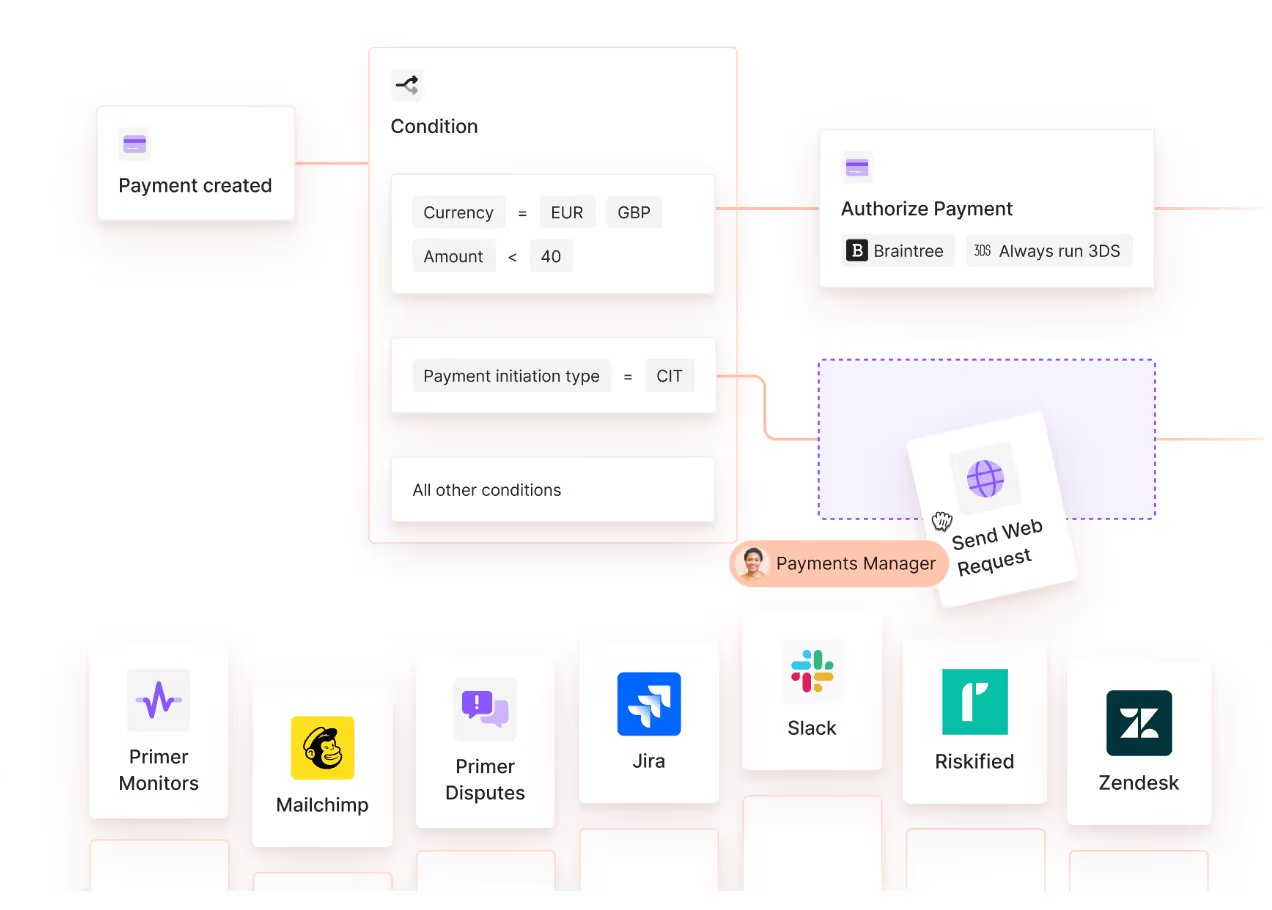
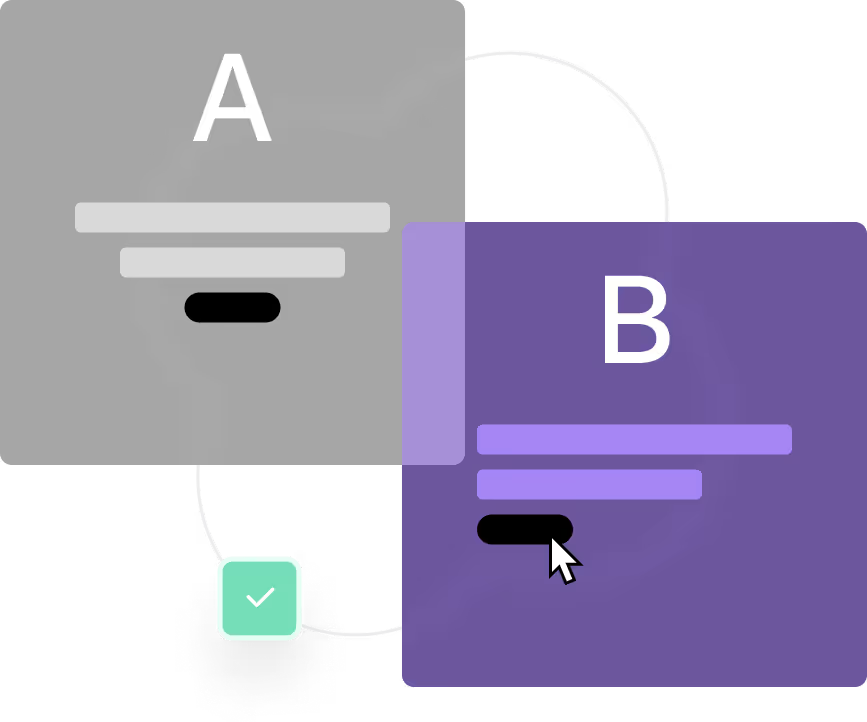
- Iterate on what works. Test and disable payment methods instantly without dev involvement, which is essential for managing a global checkout. Use Observability to see all of your payments data in one place.
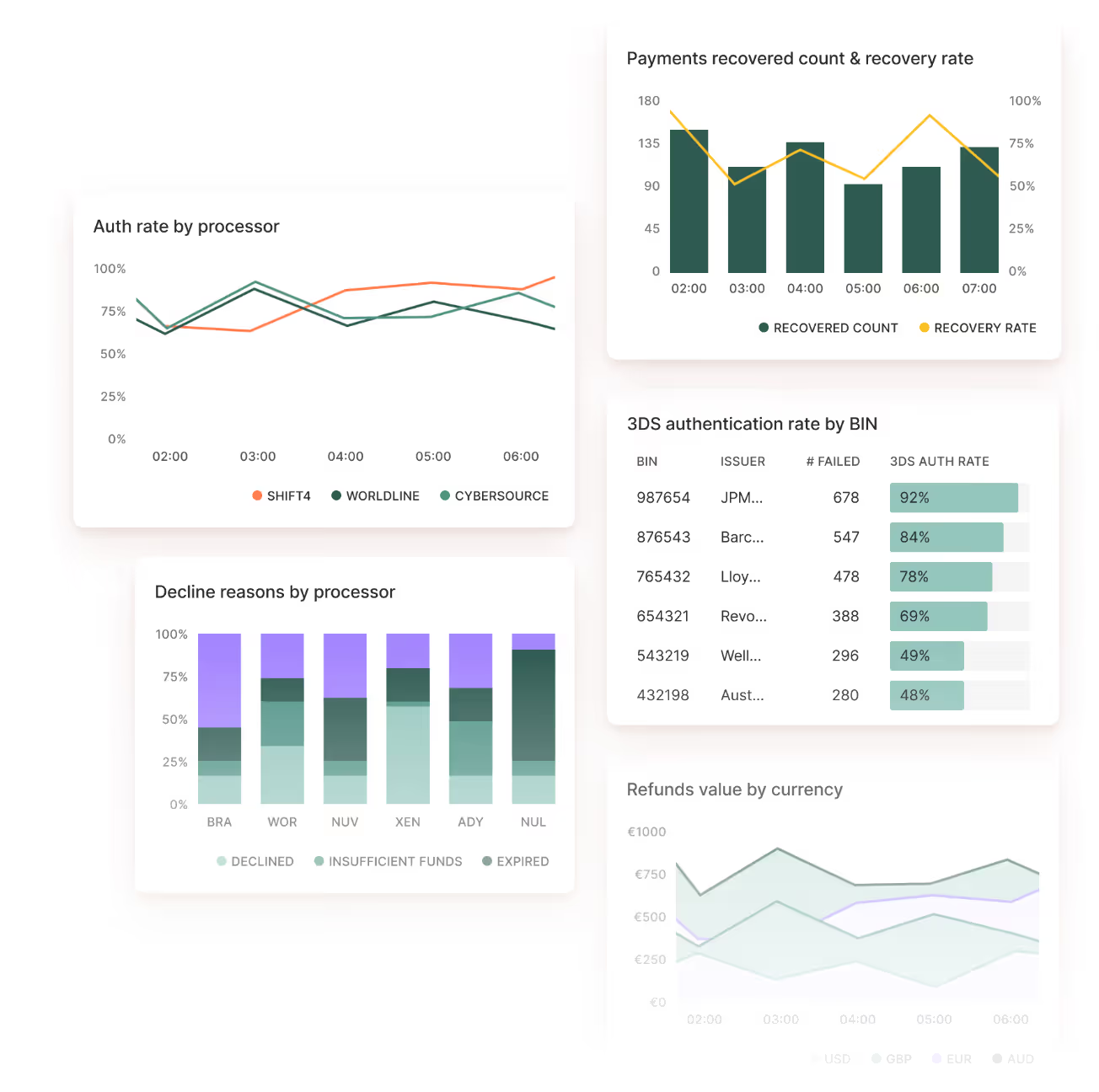
- Manage the full payment lifecycle. Primer handles deep integrations, including settlement, payment reconciliation, fraud checks, and authorization capture end to end.
- Built for global scale. You can expand into new regions without touching your core infrastructure, keeping your stack lean and your team focused on growth.
Use Primer to add new local payment methods to your payment stack
The fastest path to global coverage is a single integration with an orchestration layer like Primer. By removing the engineering bottleneck, local payment coverage becomes a growth lever rather than a technical project.
Ready for one tool that simplifies and unifies all of your payment systems? Book a call with our experts now.
Frequently Asked Questions (FAQs): iGaming local payments
1. What is the difference between an APM and a traditional payment method?
APMs include any system that isn't a major credit card network like Visa or Mastercard. In iGaming, this typically refers to e-wallets, bank transfers, or local systems like Pix that players prefer in specific countries.
2. How does payment orchestration help with iGaming compliance?
Orchestration systems handle the heavy lifting of achieving PCI DSS compliance and managing regional regulations. By centralizing data, you have a single source of truth for reporting to different gaming authorities.
3. Can I use multiple PSPs for the same payment method?
Yes, orchestration allows you to connect multiple processors for the same method. This provides redundancy; if one processor fails, the system automatically retries the payment through another without the player noticing.
4. How long does it typically take to add a new local payment method with orchestration?
Unlike traditional integrations that take months, you can often activate a new method in a few clicks through a dashboard once you have a commercial agreement with the provider.
5. What is smart routing in iGaming?
Smart routing uses data like the Bank Identification Number (BIN) and geography to send a deposit to the processor most likely to approve it. This minimizes false declines and keeps sessions active.

%20(1).png)