
Payments have historically been fragmented, and it’s only getting worse.
Every new market, payment method, and processor brings its own integration, dashboard, and data format.
This can quickly result in an unmanageable payment stack, where you can’t see the full picture without logging into multiple portals and reconciling data manually.
For fast-scaling merchants processing online payments, this fragmentation can become a serious constraint.
- Adding a new processor often requires constant engineering work, both to integrate and maintain connections.
- Comparing performance across providers means stitching together inconsistent reports from multiple dashboards.
- Even the simplest payment routing can require weeks of developer work, making it impossible to be agile in your payment strategy.
From here, you’ve got a few options.
You can consolidate more of your payments with a single PSP. Providers such as Adyen combine processing, checkout, fraud, reporting, and other payment capabilities within one ecosystem. This can simplify your setup, but it’ll also increase your dependence on one provider.
You can also build the infrastructure needed to manage multiple providers yourself. This gives you greater control and can help you unlock more value from your payments, but it requires significant investment in integrations, routing, tokenization, reporting, and ongoing maintenance. In practice, you’ll begin to operate like a payments company in your own right.
Payment orchestration offers another path, giving you a single layer for connecting and managing multiple processors, payment methods, fraud tools, and other payment services. However, orchestration platforms vary in scope, and connecting providers doesn’t always unify the wider payment lifecycle.
This guide compares single-provider consolidation, payment orchestration, and unified payment infrastructure, including the trade-offs of each approach and how to decide which model best fits your payment stack.
Primer helps merchants connect their entire payment stack through a single integration, giving them the flexibility to use the right tools for every market without being locked into one provider. Book a demo to see how it works.
Why payments become fragmented as your business grows
As you scale, the services you need to process payments effectively—such as processors, payment methods, fraud tools, and reporting systems—often come with their own APIs, integration requirements, and data formats.
As you expand into new markets and add more processors, payment methods, and fraud tools, your payment stack becomes harder to manage. Each service brings its own integration, dashboard, and data format, so even simple changes can require engineering support, while performance data is split across multiple systems and logins.
Here’s what tends to happen:
- Simple payment tasks consume engineering resources. Adding a payment method, adjusting what shows at checkout, or connecting a new processor all require development work. The payment team cannot make changes without joining the engineering queue, which can delay progress.
- There is no unified view of payment performance. Each processor reports in its own format with its own definitions. Comparing authorization rates across providers, or understanding why declines are higher in one market than another, means logging into separate dashboards and reconciling the data manually.
- Card details are locked to individual processors. A card tokenized with one provider can only be used to process payments through that provider. Even if the merchant knows another processor would perform better for certain transactions, recurring payments and returning customers are stuck where they started.
- There is no fallback when a provider goes down, so a single outage takes all transactions offline until it is resolved. Setting up a fallback means building and maintaining a separate integration, which brings the engineering bottleneck back into play.
- Payments are not being routed strategically. Every transaction goes through the same processor regardless of card type, region, or value, which can result in higher transaction fees and lower authorization rates than if proper smart routing was used.
How do you ‘unify’ your payment stack?
Unifying payments means bringing as much of the payment lifecycle as possible into one platform. Merchants can manage the following:
- Connections to payment gateways, processors and payment methods
- Routing logic that decides which provider handles each transaction
- Token storage
- Checkout experience
- Reporting
The goal is to give payment teams a single environment where they can see what is happening, make changes, and act on data without relying on engineering for every decision or logging into multiple portals to piece together the full picture.
Your payment processor may tell you it can solve this fragmentation by bringing more of your payment stack into one platform. Some providers combine processing, checkout, fraud, and reporting through a single integration. If you operate in one market and your payment needs are relatively straightforward, that may be enough.
The limitation of this option is that the business becomes dependent on that single provider's ecosystem for everything. If it underperforms in a specific market, there’s no way to route those transactions elsewhere. And if it goes down, every transaction fails until it’s back up and running. If another processor offers lower fees for a specific card type, there is no way to take advantage without building a separate integration.
Wondering how a standalone vault service compares to payment orchestration? Read more here: Payment vault or payment orchestration: How to choose the right option
How payment orchestration gives merchants processor flexibility through a single integration
Payment orchestration emerged as a way to solve the lock-in problem that can happen under a single provider.
With this solution, an orchestration layer sits between the merchant and its processors, connecting multiple providers through a single integration. This means you keep the flexibility to use the right processor for each market or card type, set routing rules that determine which provider handles each transaction, and gain a unified view of performance across all of them.
As a result, payment orchestration can reduce fragmentation while giving you the flexibility to build the payment stack that works best for your business, rather than consolidating everything with one provider.
How Primer unifies your payment stack without locking you in
Primer was built on the belief that merchants need optionality, flexibility, and freedom across their entire payments operation.
Rather than forcing a choice between one provider doing everything or a routing layer that only solves one problem, Primer connects the full payment lifecycle through a single integration and gives payment teams the tools to manage it without engineering for every change.
Accept, optimize, and route payments across any provider
Primer's connections library lets you activate a range of local and global processors and alternative payment methods (APMs) such as digital wallets in just a few clicks. Each provider runs through Primer's unified API, so activating a second or tenth processor requires no additional integration work.
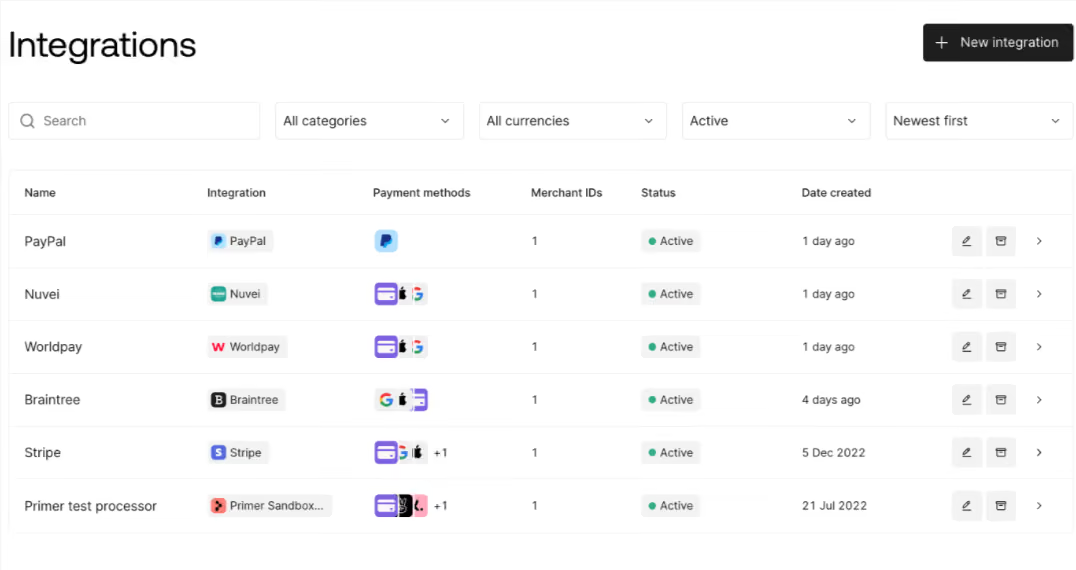
From there, your payment team controls how transactions flow. Workflows is where routing rules, fallback logic, and payment flows are built, all without code.
You could, for example, activate local payment methods where they convert best, route European debit transactions to a processor with local acquiring in the EU, send high-value transactions to a provider with stronger fraud tooling and risk management capabilities, and keep your existing processor for markets where it already performs well.
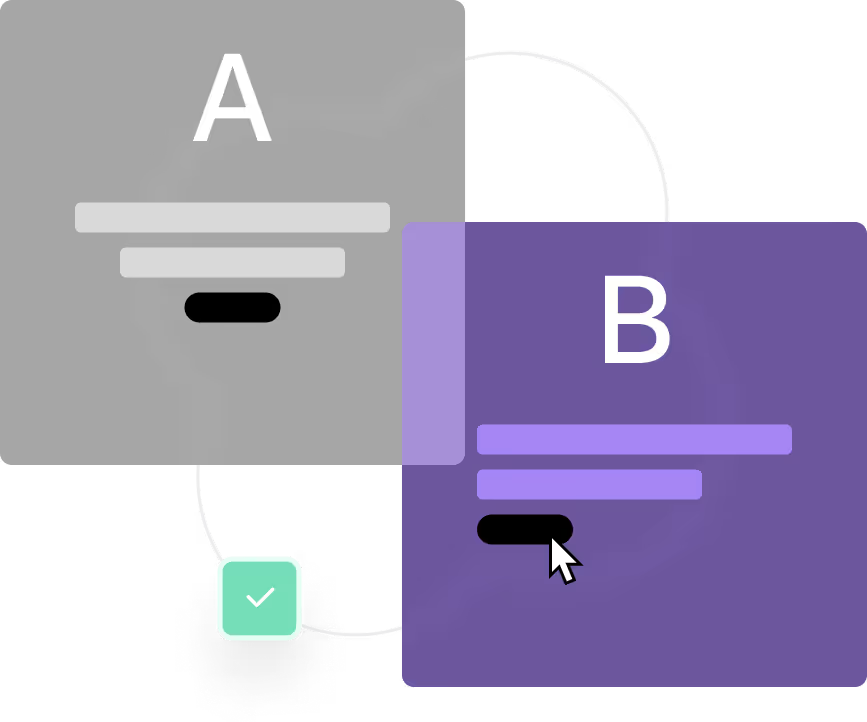
With Primer Fallbacks, any recoverable payment that fails will be automatically routed to a back up payment processed (based on criteria you set up).
This all happens seamlessly, so the customer never sees an error message or needs to re-enter their payment details. Because Primer handles 3DS above the processor layer, the customer's authentication carries over to the retry, so there is no second verification step slowing the experience down.
The result is that your payment team can build, test, and adjust how every transaction is routed and recovered, without waiting on engineering and without the customer noticing any of the complexity behind the checkout process.
Go beyond orchestration with reconciliation, global accounts, and AI
Where most orchestration platforms stop at routing, Primer extends into the operational side of payments. Reconciliation brings settlement data from every provider into one place, replacing the manual process of downloading and comparing reports across different formats
Within Reconciliation,.Costs Overview transforms every provider's fees into one standard structure, making it possible to compare the true cost per transaction across processors, reduce operational costs, and spot where you're overpaying.
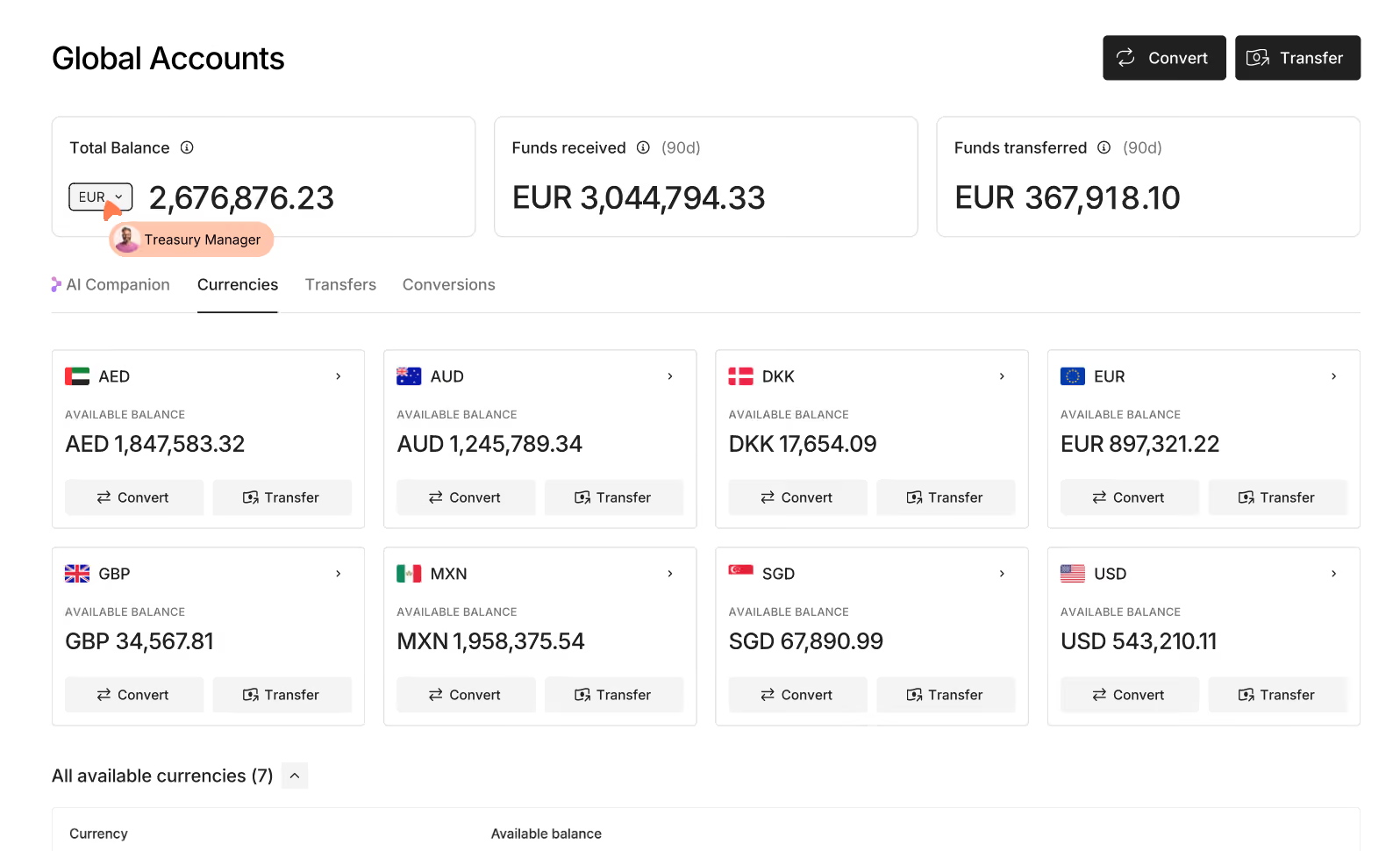
And on an international scale, Global Accounts lets merchants collect and settle in local currencies across 20+ countries, streamlining cross-border payments and reducing those fees that silently erode margins.
Read more: FX leakage: why it persists even when finance knows better
Use AI Companion to find and act on payment opportunities
AI Companion analyses patterns across the full payment flow and surfaces data-backed recommendations. Rather than requiring the team to dig through dashboards manually, Companion identifies what changed, explains why, and prepares routing adjustments or optimizations ready for review. The decision-making stays with the merchant, but the analysis that would normally take hours happens in seconds.
See everything in one place and act on it in real time
Because Primer sits across the entire payment lifecycle, all of the data flows into one place. Observability pulls performance data from every connected provider into a single filterable view: approval rates, decline reasons, and payment method performance by processor, region, BIN, or card type.
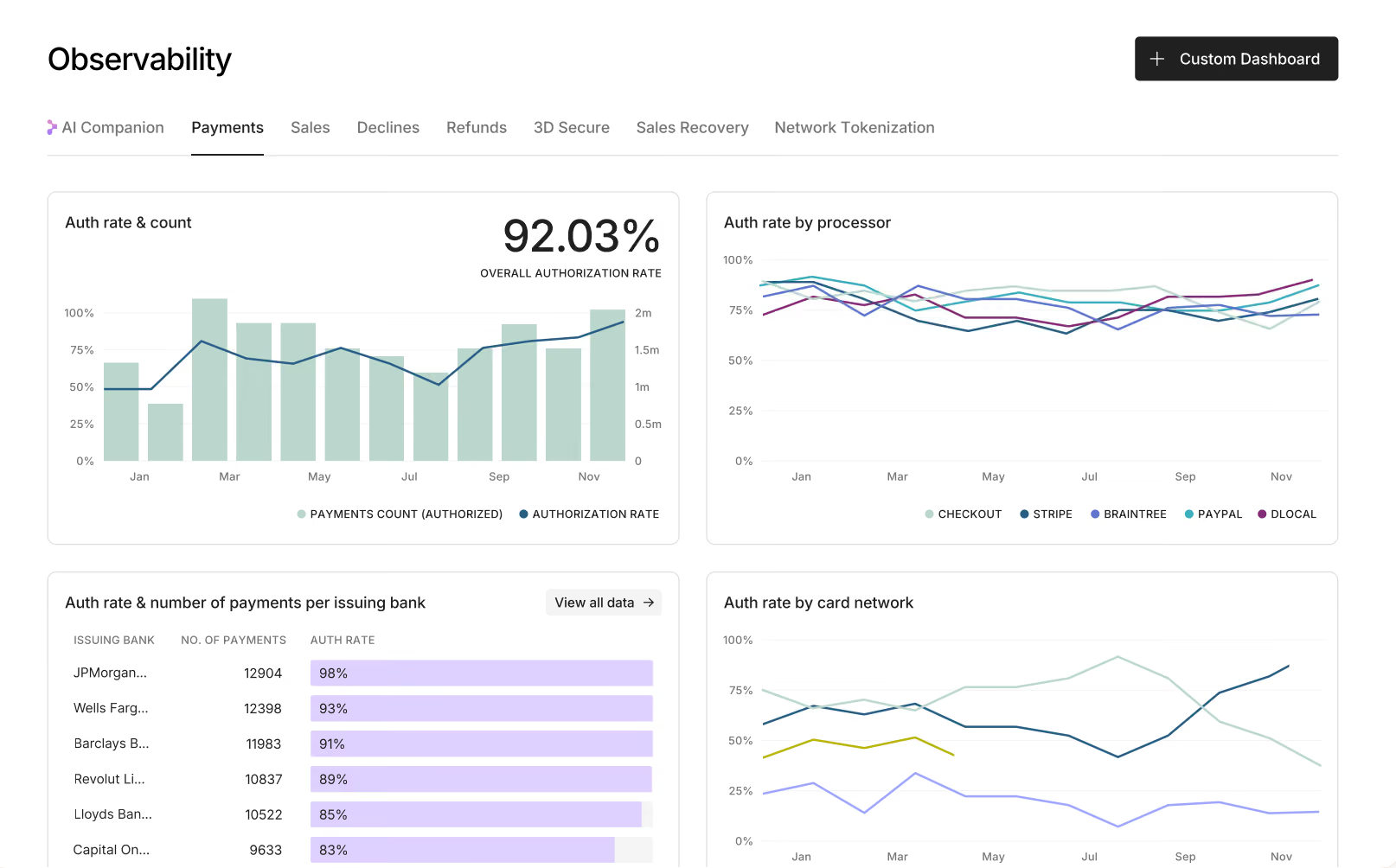
Monitors add real-time alerting when key metrics drop, so issues surface while they are still small enough to act on.
The result is that routing decisions, contract negotiations, and payment strategy are all informed by complete, real-time data in a single platform.
How GetYourGuide uses Primer as its unified payment infrastructure
GetYourGuide is a global travel experiences marketplace processing over 30 million transactions across 100,000+ experiences worldwide. As its US customer base grew, GetYourGuide needed to add a US-based processor to improve approval rates for American travellers without adding integration complexity.
"With payments, the more you try to build in-house, the greater the risk of diverting focus and resources from your core competencies. That's something we've strategically chosen to avoid by using Primer," says Arjun Muralidharan, Director of Product at GetYourGuide.
Using Primer, GetYourGuide activated J.P. Morgan Payments alongside its existing payment processors, becoming the first merchant to do so through Primer's platform. By routing US transactions to a provider many of its customers already bank with, GetYourGuide improved the chance of approval without rebuilding its payment stack.
Unify your payment stack without starting from scratch
Payment fragmentation is a natural consequence of growth. Every new market, payment method, and processor adds complexity. The question is whether you manage that complexity by consolidating everything with one provider or by connecting everything through one platform.
Both approaches involve trade-offs. Consolidation is simpler but creates lock-in. A unified infrastructure gives you flexibility and complete visibility across all payment providers, without requiring you to abandon what's already working.
Primer gives you one integration that connects a range of local and global processors, payment methods, and fraud tools. Your payment team manages routing, tokens, identity verification, checkout, and reporting from one place, and controls it all without engineering for every change.
Book a demo to see how Primer unifies your payment stack.
Frequently asked questions
What is the difference between a unified payments platform and payment orchestration?
Payment orchestration focuses primarily on routing transactions between multiple processors. A unified payments platform goes further, managing the full payment lifecycle from one place, including acceptance, optimization, and operations.
Do I need to replace my existing processors to use a unified payments platform?
No, a provider-agnostic platform like Primer connects to your existing processors through a single integration. You keep what's already working and activate additional providers as needed, without rebuilding anything.
What is the difference between unifying payments with one provider vs. one platform?
There are key differences between unifying payments with a single provider compared to using a single platform.
One provider (like Adyen) handles everything through its own stack. This is simpler but creates dependency: if that provider underperforms, goes down, or charges more than a competitor, you have no alternative without building a new integration.
One platform (like Primer) connects multiple providers through a single layer, giving you flexibility to route, retry, and optimize across all of them.
How does a unified payment infrastructure help with reporting and reconciliation?
When processors are managed separately, each has its own dashboard and data format. A unified infrastructure consolidates performance data and settlement reporting from every provider into one view, so comparisons happen in real time rather than through manual spreadsheet reconciliation.
Can a unified payments platform work alongside my existing payment setup?
Yes, Primer is designed to layer on top of existing processor relationships. You don't need to renegotiate contracts or migrate card tokens. Primer's Centralized Vault stores credentials independently, so existing and new providers all work through the same integration.

%20(1).png)