
Global ecommerce businesses often process transactions across multiple countries, which each have their own currencies and payment preferences. You may have experienced authorization rates that vary by region, high cross-border interchange fees, or struggled to integrate local payments as you expand into new markets.
This is why global ecommerce merchants are increasingly turning to payment orchestration. A payment orchestration platform can sit between you and your payment processors, which effectively replaces separate integrations with a single platform.
In this post, we’ll discuss the best payment orchestration platforms for global ecommerce merchants and how you can choose the right one for your business.
Top payment orchestration platforms for global ecommerce
These are the main orchestration platforms operating in the global ecommerce space right now:
- Primer: A unified payments infrastructure for global businesses that gives teams control over checkout, tokenization, 3DS, routing, retries and processor connections. This helps merchants improve payment performance, add new providers and payment methods, and adapt their setup across markets without rebuilding their stack.
- Primer also brings more payment operations into one platform. Reconciliation automates settlement matching, Costs Overview gives teams visibility into processor, scheme and FX fees, Global Accounts helps businesses manage funds across currencies, and Companion uses AI to help teams understand performance and identify issues faster.
- Spreedly: One of the longest-running orchestration platforms, Spreedly connects to over 120 payment gateways through a single normalized API. Its core strength is portable tokenization, where the merchant owns its payment data independently of any processor.
- Gr4vy: A cloud-native platform that gives each merchant its own dedicated cloud instance rather than shared infrastructure. Gr4vy connects to 400+ payment methods and anti-fraud providers, offers no-code tools for adding and testing new providers, and recently launched support for agentic payment transactions.
- CellPoint Digital: Focused specifically on travel and airline payments, where transaction values are high, fraud risk is elevated, and payment flows involve components like virtual card issuance and multi-currency settlement.
- IXOPAY: Combines orchestration with its own tokenization and PCI-compliant vault. IXOPAY is positioned for enterprise merchants that want orchestration and secure card storage in one platform rather than using separate providers for each.
How payment orchestration platforms benefit global ecommerce merchants
So what should a payment orchestration platform actually help a global ecommerce business do?
Reduce cross-border fees by routing to local acquirers in each market
If you’re selling globally, you could benefit from platforms that help you route to local acquirers in each market. A transaction processed through a local acquirer in the customer's country typically has lower interchange (the fee paid to the card-issuing bank) and higher approval rates than the same transaction routed cross-border.
Some platforms connect to a wide range of processors but leave activation to the merchant. With Primer, the connections are pre-built, so activating a new PSP takes clicks once the commercial agreement is in place.
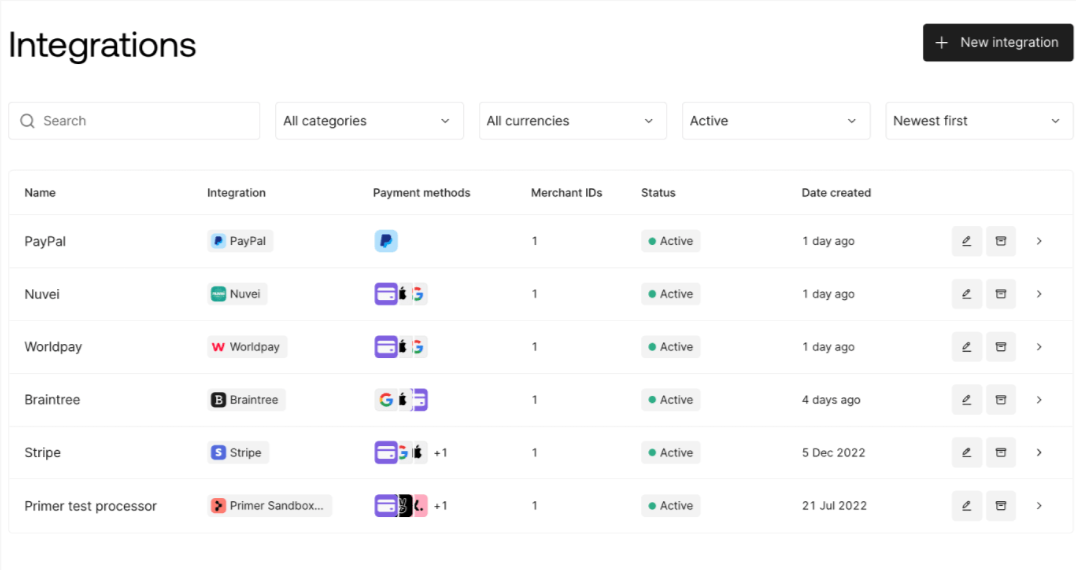
As Primer's Solutions Engineer Leon McLeggan explained, merchants often try to build multi-processor setups themselves, then come back because it wasn't as easy as they expected. Their business is selling products or services, not maintaining payment integrations. With Primer, the connections are pre-built, so activating a new PSP takes clicks once the commercial agreement is in place. Switching from one processor to another is as simple as changing a dropdown and hitting publish.
But local acquiring only covers card transactions. If you're selling into a market where cards aren't the dominant payment method, you need local alternative payment methods too.
Offer the local payment methods each market actually uses
Coverage of local alternative payment methods varies significantly between platforms. Primer's connections library covers a range of local and global processors and payment methods, and the payment team activates what each market needs from the dashboard without engineering involvement.
Once acquirers and payment methods are connected, the merchant needs routing logic to direct each transaction to the right one.
Route each transaction to the ideal processor without code
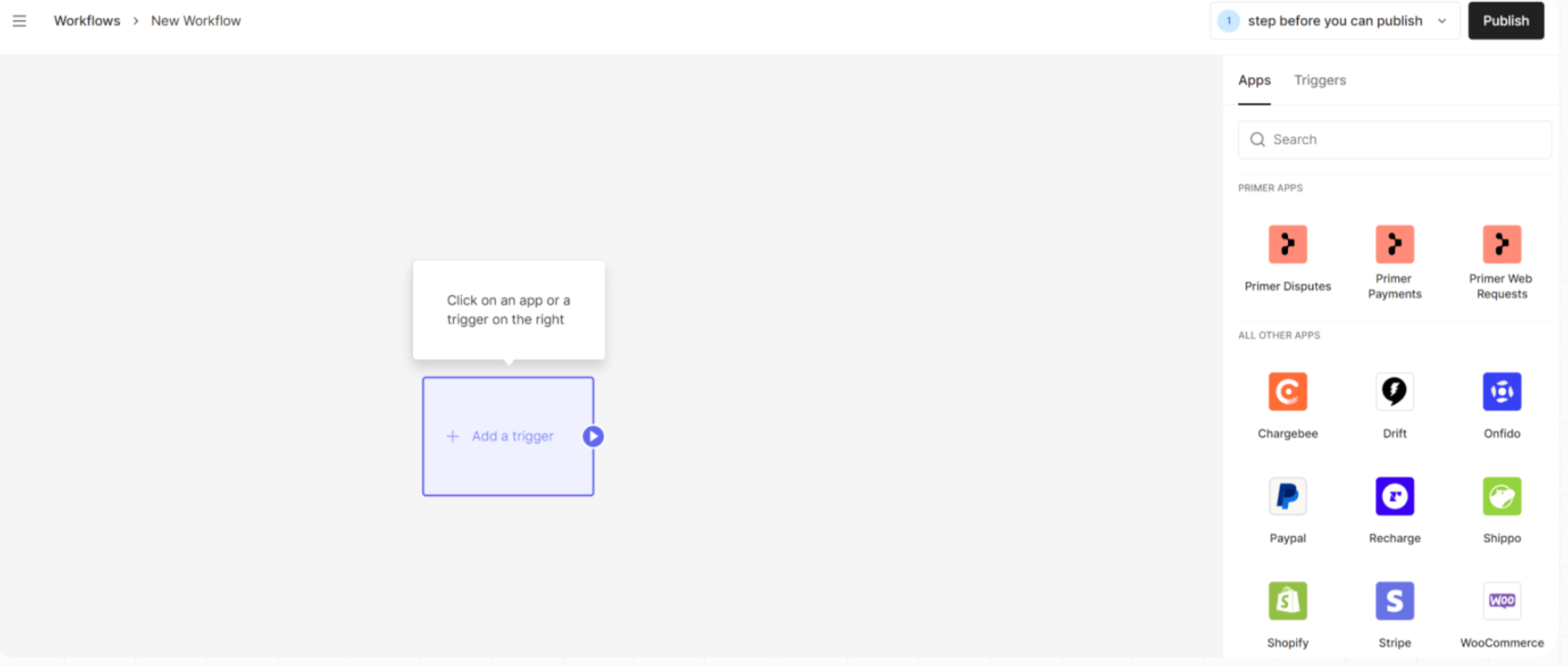
The optimal acquirer for a transaction in Germany isn't the same as for one in Australia. Primer's Workflows lets your payments team build if/then conditions based on any transaction data point, and test them by splitting live traffic between two strategies to see which performs better. No code or engineering dependency is required.
Routing only works end-to-end if two other things are in place: token portability and agnostic 3DS.
Keep routing flexibility for returning customers with portable tokens
If a merchant's card tokens are locked to one processor, routing flexibility only applies to first-time purchases. Returning customers and recurring payments are stuck with whichever processor originally stored the card. Primer's agnostic vault stores tokens independently of any single processor, and network tokenization via Visa and Mastercard auto-updates tokens when cards expire.
Recover failed payments without forcing re-authentication
3DS is the step where customers verify their identity with their bank, and it’s typically tied to the processor that handled the transaction. If a payment fails and retries with a different processor, the customer has to authenticate again.
Primer runs its own 3DS above the processor layer, so the authentication result transfers to any fallback processor.
How Ego switched PSPs in seven days and saved €30K a month with Primer
Ego is a fashion brand selling across Europe and the US. When its mobile app started outperforming revenue forecasts, its existing PSP wouldn't renegotiate the contract terms. Ego was locked into fees based on a lower projected volume, and the cost was squeezing its margins.
Using Primer, Ego signed a contract on a Friday and was live on the following Friday. The switch saved €30,000 a month in payment fees. Ego also saw a 10% increase in app conversion rates, even before fully customizing the checkout, because Primer's drop-in checkout was faster and more stable than the previous setup.
As Ego's Head of Software Engineering Manuel Perez explained, Primer gave the team complete control over its payment strategy without relying on heavy engineering work, which is critical for a brand scaling rapidly across markets.
Why choose Primer for global ecommerce
If you're evaluating orchestration platforms for multi-market ecommerce, here's what Primer delivers and why it matters:
- Agnostic 3DS that almost no other platform offers, so fallback retries don't lose customers to re-authentication friction.
- Pre-built processor connections that activate in clicks, so entering a new market is a routing decision rather than an integration project.
- Token portability across any connected PSP, so routing decisions apply to returning customers and recurring payments, not just new transactions.
- The Observability Dashboard shows cost and performance across every processor in one view, so the payment team can compare and act on real data.
Book a demo to see how Primer handles local acquiring, payment method activation, and cross-market routing for global ecommerce.
Frequently asked questions (FAQs) about payment orchestration for global ecommerce
What's the difference between a payment orchestration platform and a PSP?
A PSP processes transactions. Meanwhile, an orchestration platform sits between you and your PSPs, giving you a single integration to connect to multiple processors, route between them, and manage fallbacks and reporting from one place.
How long does it typically take to add a new processor with an orchestration platform?
A direct integration can take four to eight weeks of engineering time. With an orchestration platform, the connection is pre-built, so activating a new PSP takes clicks once the commercial agreement is in place.
What does agnostic 3DS mean and why does it matter for fallbacks?
3DS is the step where customers verify their identity with their bank. When it's tied to a specific processor, the result can't transfer to a fallback. Agnostic 3DS runs the authentication above the processor layer, so if a payment fails and retries elsewhere, the customer doesn't have to authenticate again.