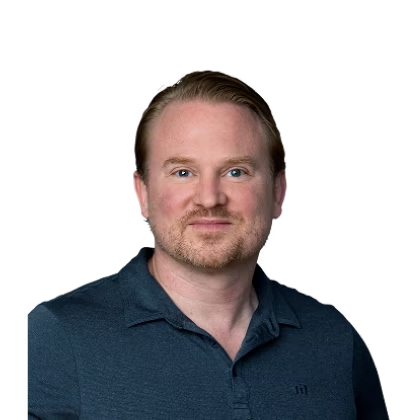
The Founder's Story with Gabriel Le Roux
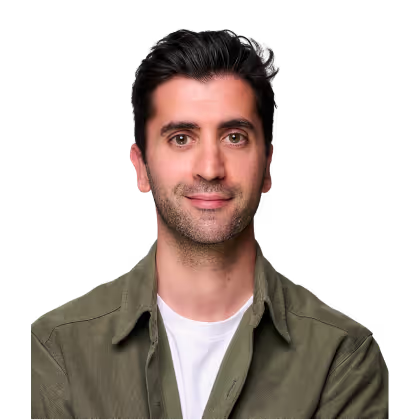
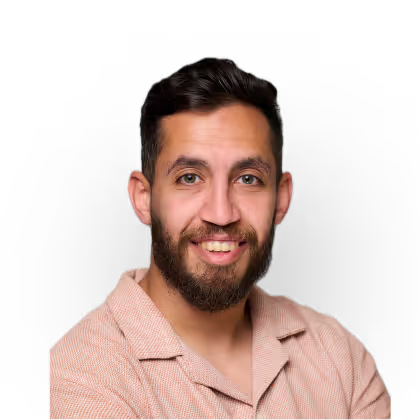
Primer CEO & Co-Founder Gabriel Le Roux speaks on the Payments Unfiltered Podcast about his journey in payments, his experiences founding a successful start-up, and the evolution of the payments ecosystem over the past decade and where it’s going.

Theo Spyrides
Host of Payments Unfiltered

Gabriel Le Roux
Co-founder & CEO @ Primer

Theo Spyrides: Welcome, Gab.
Gabriel Le Roux: Thanks for having me, this is exciting.
TS: Why did you decide to start a payments company?
GLR: I was at Braintree/PayPal for about five years, first selling to startups, then to larger businesses on the product side. Mapping out companies' payments infrastructure, I realized payments isn't just something that needs to work at checkout — businesses wanted to use it as a lever for growth and differentiation, and we couldn't solve that within Braintree. That frustration — realizing they wanted a much bigger, underlying infrastructure — led Paul (my co-founder) and me to start Primer.
TS: Why did you join Braintree in the first place?
GLR: I wanted to join a tech company and was fascinated by payments — how central they are to everything, often invisible (you don't realize you're "paying" when you take an Uber). Braintree and PayPal were leaders in the space, so it was a deliberate move.
TS: Was there a moment you fell in love with payments?
GLR: I wouldn't say fell in love — more that I became passionate about how powerful payments could be, and how transformative solving them properly could be for a business.
TS: How did you build your expertise, since there's no "payments degree"?
GLR: It's learned on the job — talking to businesses, staying product-minded, always going a level deeper than the surface. I still apply that today, and tell my team to do the same.
TS: You moved from EMEA commercial lead to a US product role — what drove that?
GLR: I got increasingly involved with an innovative PayPal product, working closely with the US team, and eventually they wanted to expand its usage and partnerships — that pulled me into a product role in the US, around 2019.
TS: How did you find San Francisco?
GLR: Interesting, but very tech-centric — almost everyone works in tech, so conversations can be a bit one-note. I find that a little different from somewhere like London, which is more of a melting pot across industries.
TS: Was there a specific problem at Braintree that made you think "I can't solve this here"?
GLR: Merchants have huge payments roadmaps — optimizing checkout, expanding into markets, managing data, and more. Paul and I realized we could only ever solve a slice of that from within Braintree. The only way to properly solve it was to build the underlying infrastructure ourselves — someone had to do it.
TS: Did you consider doing this within Braintree?
GLR: Braintree and PayPal are great, but there's a ceiling to what you can do inside an existing payments company. We felt we had to go out and redefine what payments should be for merchants ourselves.
TS: Did you always know you'd start a business?
GLR: Not as a kid, but I always had this itch to solve problems — little ideas jotted down over the years. It took time to find the right opportunity, which came after years of putting myself in merchants' shoes at Braintree/PayPal.
TS: You were around 30 — were you scared? What made you confident?
GLR: Not really scared — Paul and I were extremely motivated and passionate; we just knew we had to do it.
TS: Do you think business school helped?
GLR: It helps structure your thinking, but isn't necessary for success. When I hire, I care about motivation and experience, not where someone studied.
TS: You pitched at IE Business School's Venture Day in 2013-14 — what was that?
GLR: With two friends in Madrid, we noticed there was no easy way to find inventory at small independent shops, so we pitched an app/website listing their stock — essentially a "buy online, pick up in store" model. We built an MVP and worked with a few shops, but eventually moved on to other things.
TS: It sounds like empathy for merchants has always been part of you.
GLR: I think entrepreneurs are driven by wanting to help others solve real problems — that's exactly what we do at Primer for merchants' payments teams.
TS: You and Paul famously had early meetings in a coffee shop using the free Wi-Fi — how did you position Primer to merchants and VCs early on?
GLR: We went out and talked to hundreds of businesses globally to validate what to build, which shaped our positioning: Primer as the unified infrastructure that replaces multiple integrations, scattered data, and inconsistent experiences with one simple layer — for merchants, partners, and the wider ecosystem, across UK, EU, US and APAC.
TS: Did that resonate with VCs, given how complex payments are?
GLR: It took education — translating jargon into everyday, relatable experiences (like paying at checkout or via Uber) to walk people through the value step by step.
TS: Any funny rejection stories?
GLR: Plenty of rejections from people who just didn't grasp the vision — no single funny story, but a lot of "we don't get it."
TS: Has anyone who rejected you reached out since?
GLR: Yes — definitely had people slide into the DMs since.
TS: Quick-fire round, Gab:
Early bird or night owl?
GLR: Early bird.
TS: Tea or coffee?
GLR: Coffee.
TS: Card or Apple Pay?
GLR: Card.
TS: UK or France?
GLR: UK.
TS: Favorite holiday destination?
GLR: French Alps.
TS: In-store or online?
GLR: Online.
TS: Book or film?
GLR: Book.
TS: Restaurant or takeaway?
GLR: Restaurant.
TS: Skiing or running?
GLR: Running.
TS: One thing you'd change about payments?
GLR: Making it easy for anyone to leverage payments.
TS: You started Primer just before Covid — was remote-first a conscious choice?
GLR: Yes, before Covid. Paul and I were already in different countries (US/UK) working remotely by necessity, and since what we were solving was global, we wanted the best talent everywhere. Today Primer has employees across twenty-six countries and thirty-four nationalities.
TS: How do you build culture in a remote company?
GLR: It takes real investment — regular events like our biweekly "town halls" (nicknamed Beer Kaisa, after Friday drinks we used to have while starting Primer), clear async communication on Slack, and randomized "donut" pairings so people meet colleagues outside their usual team, often more than they would in an office.
TS: Any downsides to remote work?
GLR: Not really, as long as you have the right tools, strong documentation, and trust in your employees. It lets us hire the best people anywhere.
TS: You positioned Primer as global from day one — why, and would you change anything?
GLR: Having lived and studied in multiple countries myself, I knew the payments problem was universal, not local — every business globally wants more control, visibility, and new commerce experiences from their payment stack. So it made no sense to restrict ourselves to one country.
TS: You've lived in nine countries — Italy, Hong Kong, South Korea, Spain — the definition of Mr. Worldwide.
GLR: Living in Korea especially, seeing how people use super-apps like Kakao for payments, shaped how I think about the space.
TS: You've owned go-to-market since day one — how did you build that from scratch?
GLR: Same principle as before: immerse the team in merchant problems, act as an extension of their payments team, and hire people with that mindset from day one.
TS: How did you decide which functions to build and when — like sales ops/rev ops?
GLR: I believe strongly in data, so we invested early in sales ops/rev ops to capture insights from every conversation, then built out the GTM org to support each stage of the customer relationship.
TS: How have partnerships evolved at Primer?
GLR: It's all about education — showing partners how Primer helps their sales and integration teams. We've grown from early ambiguity to Primer becoming a genuine enabler and distribution channel across the ecosystem.
TS: The GTM team's product knowledge really stands out.
GLR: That comes back to being product-minded and going deep, not just surface-level.
TS: Was there a defining "we've built something special" moment?
GLR: Seeing merchants use our workflow engine as if they'd always had it — completely naturally, right from the first use. That's when Paul and I knew we were doing the right things.
TS: Primer made Forbes' 2021 Cloud 100 Rising Stars list — did that feel special, especially since Primer wasn't even two years old?
GLR: Definitely — great recognition for the whole team's hard work.
TS: Has there been a standout personal challenge along the way?
GLR: Plenty of hard moments, but Primer's culture — rallying together, pulling in the right people — always got us through. Cross-functional collaboration (marketing with sales and product, customer success with engineering) is central to how we handle challenges: staying driven, resilient, and willing to make hard calls.
TS: I'll never forget being on a call with you at nearly midnight solving a merchant incident — do you think that's normal for a CEO?
GLR: Absolutely — that's the reality of the job. We're part of our customers' team, so it's natural to jump in whenever needed, even late at night.
TS: You're constantly meeting merchants and investors globally — what common themes are you seeing now versus at the start?
GLR: Companies increasingly realize how much impact payments can have — not just for the payments team, but for marketing, support, finance, and customer success too. It's spreading well beyond a single department.
TS: Has how you articulate Primer changed over time?
GLR: Not fundamentally — the core problem is the same, but the market itself has become more educated.
TS: We got through this whole conversation without saying "orchestration"!
GLR: Orchestration is just one use case for Primer — we're really a unified infrastructure supporting expansion, data consumption, and payment flows across many use cases.
TS: Are VCs more attuned to the power of payments now?
GLR: Yes, definitely — there's a much clearer understanding today of leveraging payments for growth and putting payment success at the center of the business.
TS: You've been in payments a decade — what might the space look like in 2034?
GLR: Hard to predict, but payments will keep becoming more invisible and embedded — think Amazon Fresh-style "walk in, walk out" experiences. Teams that never touched payments before will start using them to improve loyalty, operations, and differentiation — payments becoming embedded across every part of a business.
TS: I agree — payments as a siloed function will disappear.
GLR: I think so too.
TS: One piece of advice for a new fintech founder?
GLR: Believe in yourself, be resilient, listen to others, and surround yourself with the right people — your team is what makes the company succeed.
TS: Gab, thanks so much for being our first guest on Payments Unfiltered.
GLR: Thanks, Theo. That was fun.
Meeting with the best in the business
Primer puts you in control of how money moves across the business. With our unified infrastructure you can orchestrate every flow, reduce friction, and capture more revenue everywhere.







Latest episodes
March 12, 2025
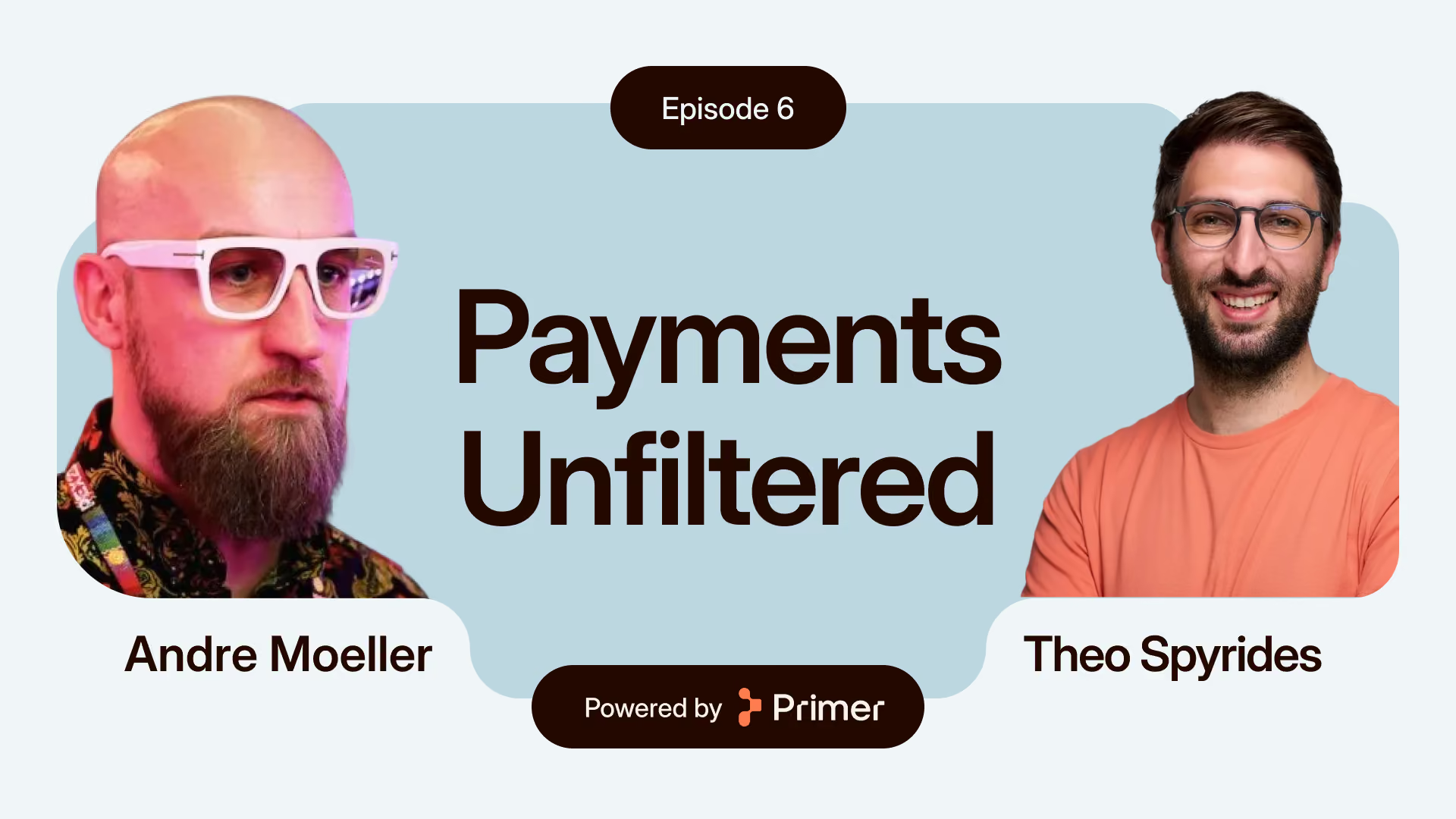
Setting up payments for success with André Moeller (Elli)
Featuring:
Theo Spyrides
&
André Moeller
In this episode of Payments Unfiltered, Theo Spyrides sits down with André Moeller, Payments, Risk, and Fraud Professional Lead at Elli (Volkswagen Group’s energy and charging solutions provider). They explore the key strategies for setting up payments correctly, including defining the optimal payment flow: Understanding the difference between Customer-Initiated Transactions (CIT) and Merchant-Initiated Transactions (MIT); selecting the right payment methods: Aligning payment options with customer preferences, average order values, and regional trends; avoiding misalignment: Why businesses must involve payment experts early to prevent friction, fraud, and failed transactions; optimizing checkout experiences: How too many payment options can create unnecessary complexity and reduce conversion rates; the role of data: Using insights to optimize payments, reduce fraud, and improve business strategy; and building a strong payments team: Why hiring experienced payments professionals is critical for success.
February 11, 2025
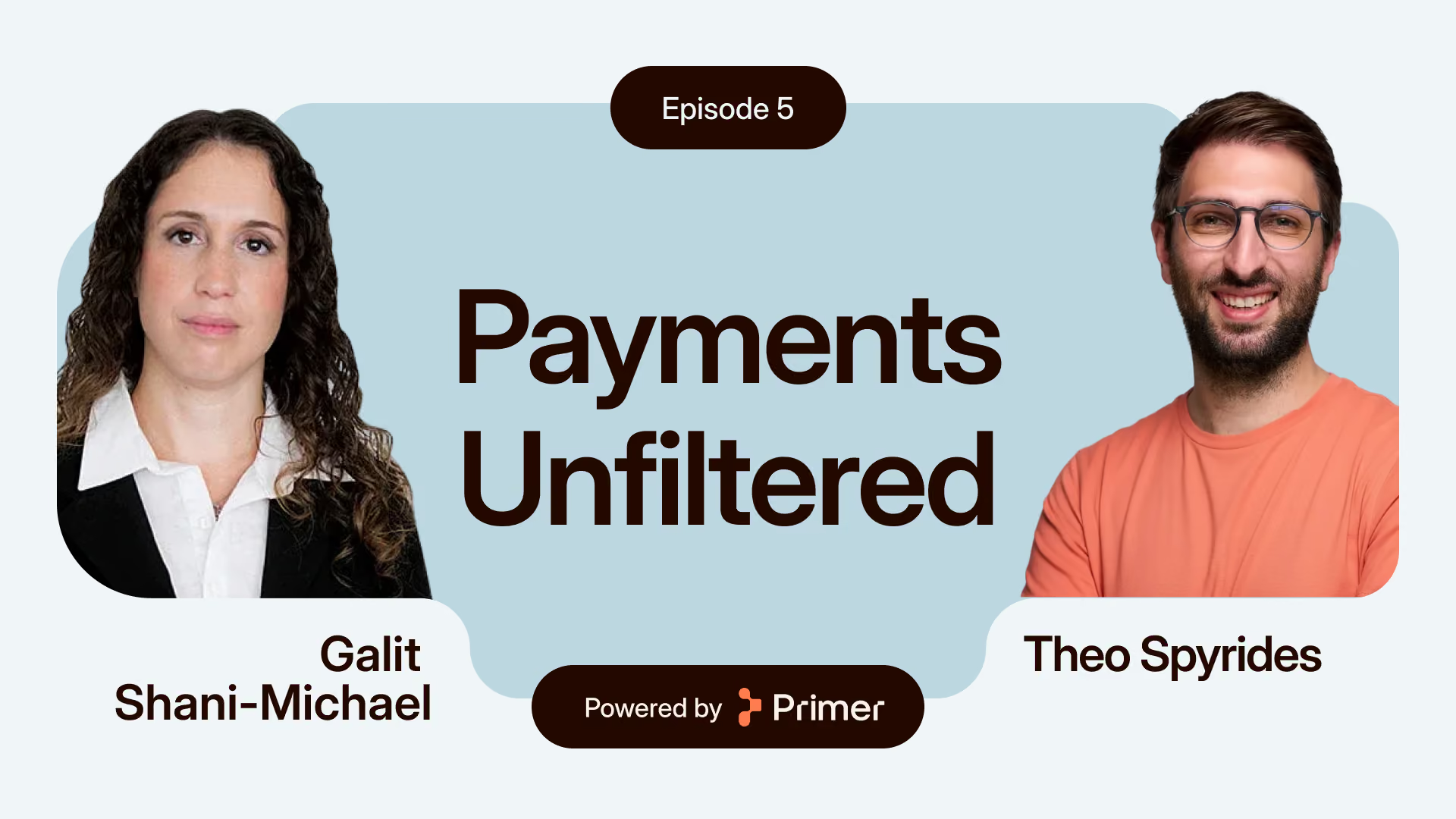
Buyer liars, AI fraudsters & lost revenue with Galit Shani-Michel
Featuring:
Theo Spyrides
&
Galit Shani-Michel
Fraud is evolving, and merchants can’t afford to fight it alone. In this episode of Payments Unfiltered, our host, Theo Spyrides, speaks with Galit Shani-Michel, VP of Payments at Forter, to discuss the rise of AI-powered fraud, the growing threat of friendly fraud, and why false declines cost businesses more than they realize. They also discuss why traditional fraud rules no longer work, how merchants can leverage data-sharing networks, and the real impact of 3DS on fraud prevention and conversion rates.

October 8, 2024
How partnerships power payments with Michaela Weber
Featuring:
Theo Spyrides
&
Michaela Weber
Join host Theo Spyrides as he dives deep with Michaela Weber, SVP & GM of Payments & Global Business Development at BigCommerce, to reveal how partnerships are reshaping the payment ecosystem. Discover how these alliances are fueling innovation and unlocking massive value for merchants. Theo and Michaela also discuss the breakthrough ecommerce trends and cutting-edge tactics merchants use to redefine their customers' checkout and payment experience.
August 7, 2024
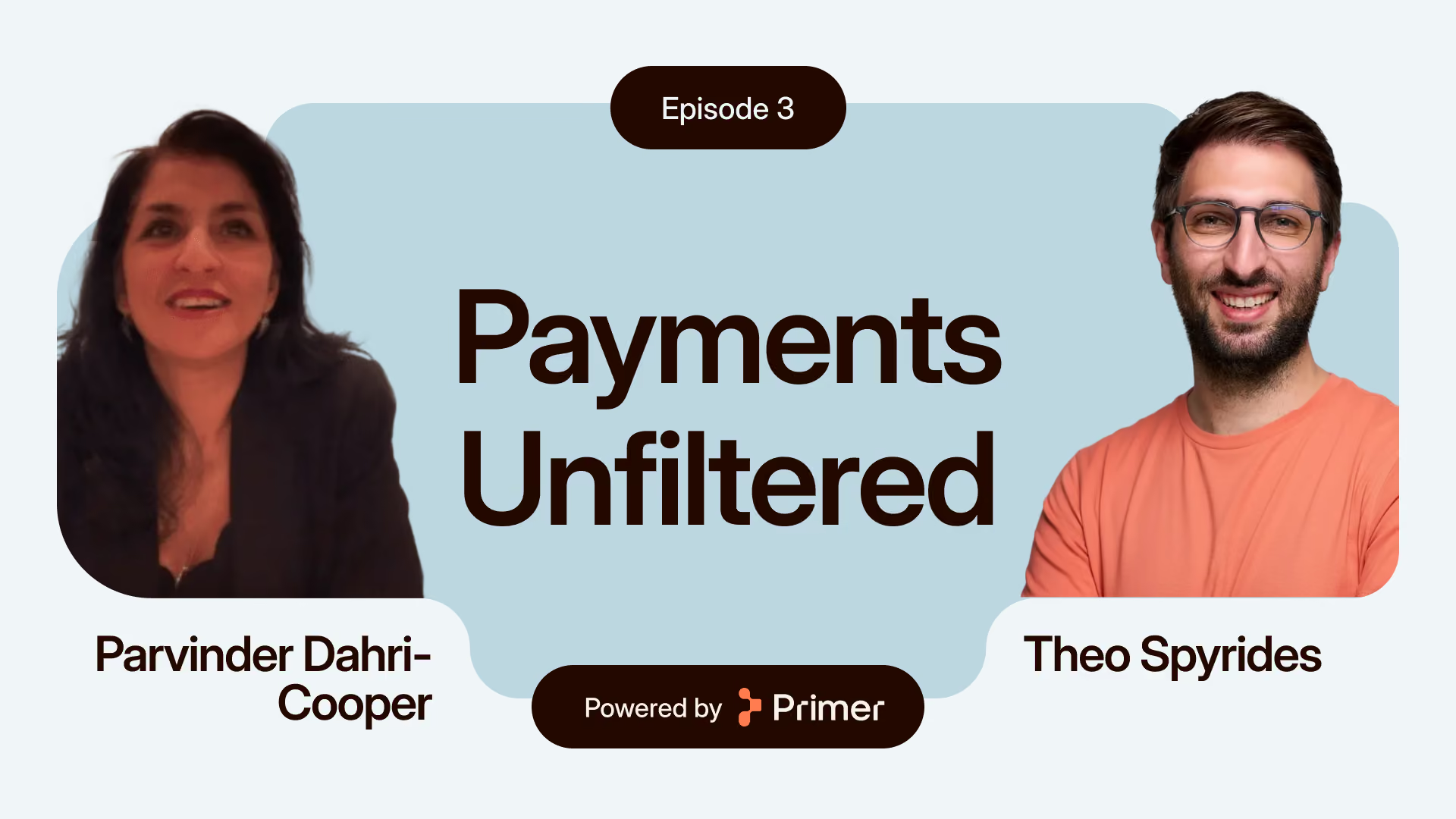
Driving change in fintech with Parvinder Dahri-Cooper
Featuring:
Theo Spyrides
&
Parvinder Dahri-Cooper
Join host Theo Spyrides as he sits down with Parvinder Dahri-Cooper to explore her extensive experience in the payments ecosystem. Parvinder shares insights from her pivotal role in taking Worldpay to IPO and discusses her impactful efforts in driving diversity, equity, and inclusion (DE&I) within the fintech industry. Discover why fintech must champion diversity and how it can lead the charge in supporting underserved communities. This episode also delves into the challenges of balancing product innovation with regulation and the potential for fintech to drive social good.
April 25, 2024
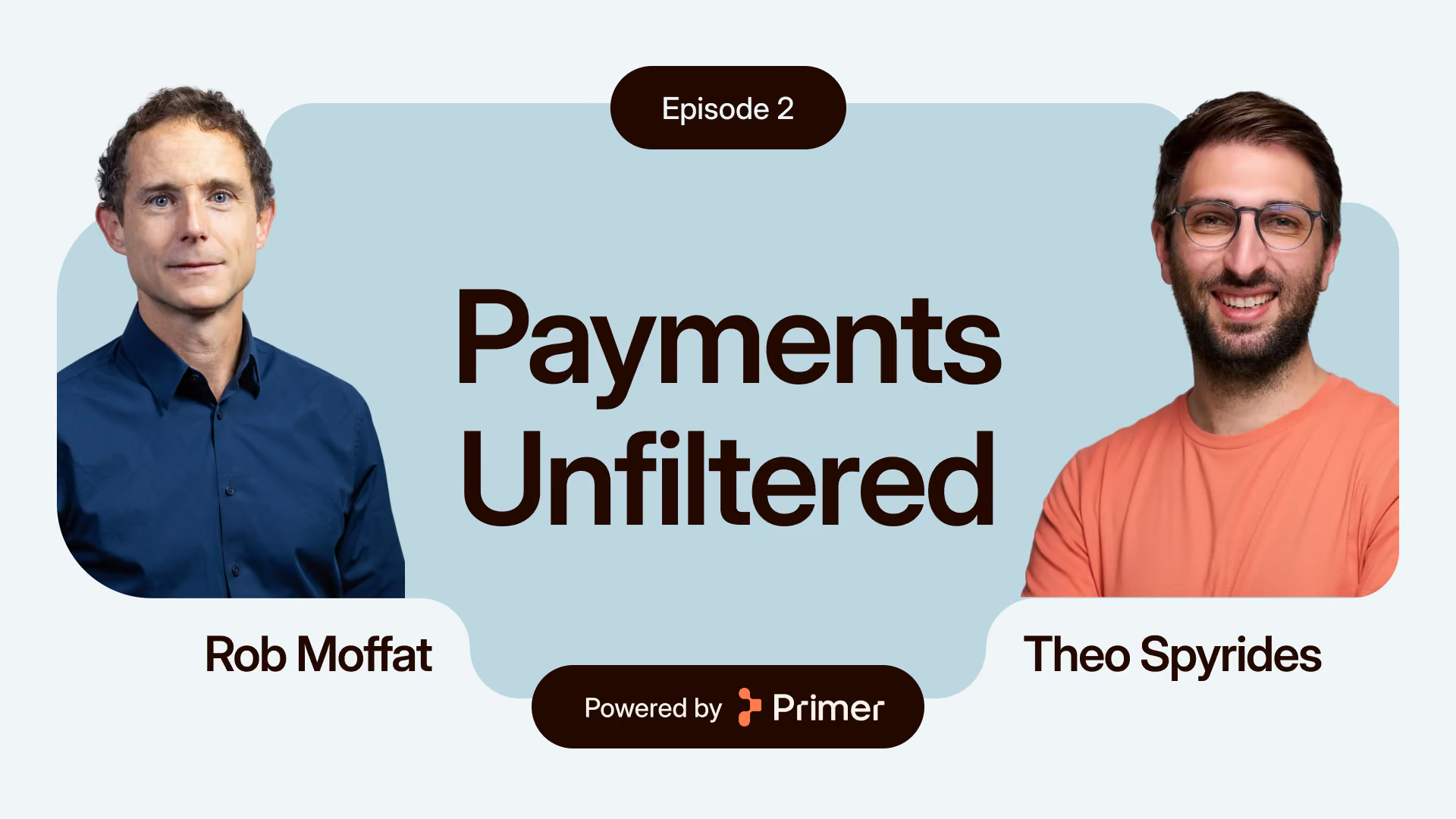
Behind the scenes with a Fintech VC, featuring Rob Moffat
Featuring:
Theo Spyrides
&
Rob Moffat
Rob Moffat, a partner at Balderton Capital, joins Theo Spyrides to discuss his journey into the VC space and his passion for payment and fintech innovation. He also discusses the trends He believes have shaped the payment industry in the last five years, how He spots and evaluates promising payment startups, and the essential skills and traits that payment entrepreneurs need to thrive.