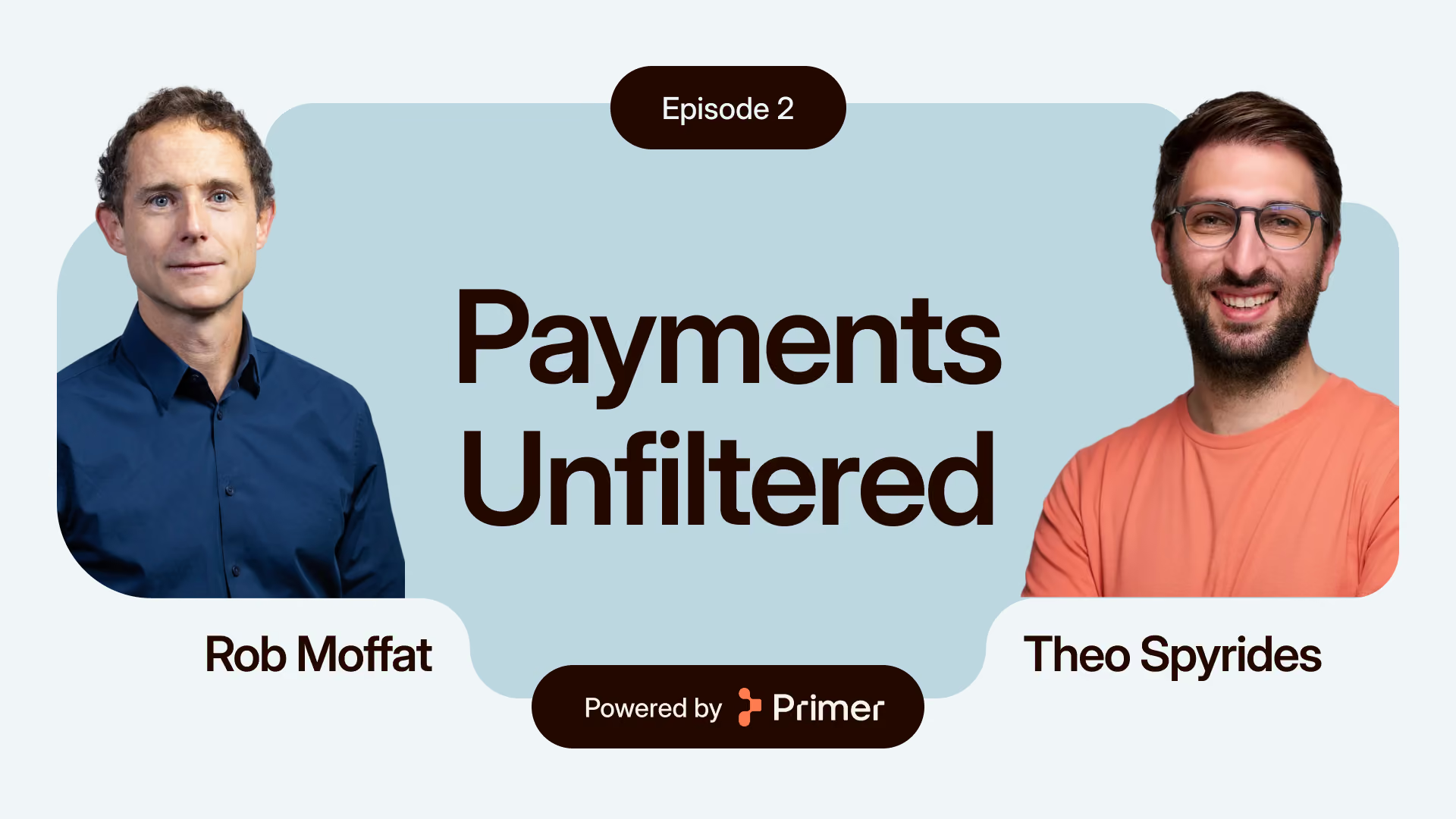
Behind the scenes with a Fintech VC, featuring Rob Moffat
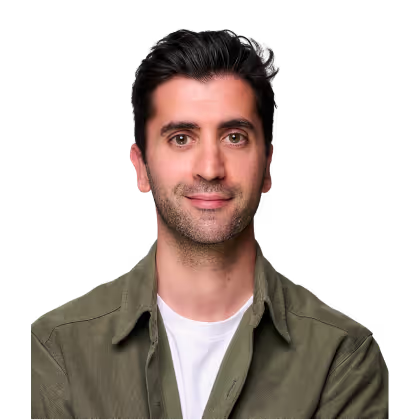
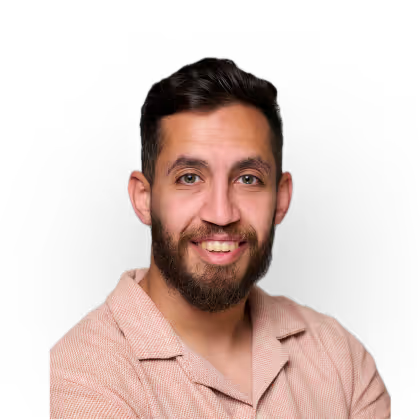
Rob Moffat, a partner at Balderton Capital, joins Theo Spyrides to discuss his journey into the VC space and his passion for payment and fintech innovation. He also discusses the trends He believes have shaped the payment industry in the last five years, how He spots and evaluates promising payment startups, and the essential skills and traits that payment entrepreneurs need to thrive.

Theo Spyrides
Host of Payments Unfiltered
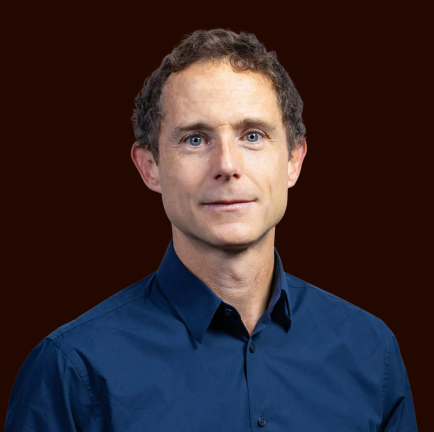
Rob Moffat
Partner @ Balderton Capital

Theo Spyrides: Rob welcome to the show.
Rob Moffat: Thank you good to be on
TS: It would be amazing to hear your perspective from The Venture Capital side. Why venture capital? What drew you into the VC world?
RM: I started my career in strategy consulting at Bain before moving to Google in 2007. What I loved about Google was seeing how quickly technology companies could change the way we live and work. When Google became a much larger company, I wanted to get back closer to smaller, innovative companies. I initially thought venture capital would be a two-year move to learn about startups, but almost 15 years later I’m still here. What keeps me in venture is the opportunity to meet ambitious founders, explore new markets and work with incredibly smart people. I enjoy being close to company building without necessarily having to manage the day-to-day operations.
TS: You spent seven years at Bain. Do you think a management consulting background set you up for success in VC?
RM: There’s a view that consultants make bad VCs because they haven’t experienced the founder journey firsthand. I understand that perspective. There’s no substitute for having built a company yourself. However, a lot of venture involves analysing businesses, understanding markets and evaluating opportunities. Those are skills that consulting, banking and strategy roles can develop. The ideal VC profile probably combines both perspectives: the strategic thinking from consulting and the empathy that comes from having built a company.
TS: Do you think having different backgrounds across your VC team is important?
RM: Absolutely. At Balderton, we have partners with different experiences. Some have founded companies, some come from big technology companies and others have investing backgrounds. That diversity matters because founders face different challenges at different stages. Having people who have seen those challenges from different angles helps investors provide better support.
TS: You joined Google around the time YouTube was acquired. What was it like being inside Google during that acquisition?
RM: It was a really interesting lesson in how difficult it is to predict the future. At the time, YouTube was losing money and generating almost no revenue. One of my first projects at Google was figuring out how to monetise it. The challenge was that creators didn’t want anything that would damage the user experience. They didn’t want pre-roll ads or intrusive advertising, which made monetisation difficult. Looking back, I was far too pessimistic. YouTube became one of Google’s biggest businesses, and it showed me how hard it is to predict the trajectory of great technology companies.
TS: You’ve spoken before about frustrations with big companies. What was difficult about working at Google as it grew?
RM: The biggest challenge was meeting overload. Everyone’s calendar was open, so meetings multiplied quickly. You could end up with your entire day filled with discussions and have very little time left to actually do the work. Large companies also have more approval layers. I remember working on Google’s price comparison product for financial services and presenting it to senior leadership after months of work. They weren’t interested because it wasn’t aligned with their biggest priorities. That experience made me appreciate the speed and focus you get in smaller companies.
TS: How did Balderton stand out when you were deciding where to move?
RM: What attracted me was the strength of the partnership. People like Bernard Liautaud, who founded a multi-billion-dollar software company, and Tim Bunting, who had deep financial services expertise, were incredibly impressive. Balderton also had a strong reputation investing in European founders since 2000. It had seen multiple cycles and understood what it takes to build companies over the long term.
TS: You originally expected VC to be a short-term move before potentially starting your own company. What made you stay?
RM: I explored starting companies but never found the right co-founder. Building a company requires having the right people around you. The bigger reason I stayed was that I genuinely enjoy venture. I enjoy working with founders and being part of Balderton’s own growth journey. When I joined, Balderton was a smaller firm. Since then, we’ve grown significantly, expanded across Europe and built a much larger platform. It’s not the same as building a startup, but there’s still a real company-building element.
TS: You joined VC shortly after the 2008 financial crisis. What was that period like?
RM: The first year was difficult. There were many down rounds and companies were restructuring their financing. It was a challenging environment, similar in some ways to 2023. But the companies that survived were often exceptional because they had been tested through difficult conditions. At that time, the European technology ecosystem was much smaller. There were fewer investors and fewer startups, but the quality companies still stood out.
TS: How did you end up focusing on fintech and payments?
RM: My background was already connected to financial services. At Bain, I worked mostly in financial services, and at Google I worked on financial comparison products. Balderton had also invested in some early fintech companies, including payments businesses, so I had exposure to the space early on. Payments has always been an interesting VC category, but fintech really accelerated after the financial crisis. Changes in regulation, consumer behaviour and technology created opportunities across banking, lending, wealth management and payments.
TS: Would you consider yourself a payments expert?
RM: Payments is humbling. Every time you think you understand the industry, someone introduces a new acronym and you realise there’s another layer. I probably know more about payments than many VCs, but far less than people who work in payments every day. A lot of my learning has come from founders. Talking to people building companies in the space gives you insights you won’t find written down.
TS: Is learning about payments something you have to continuously work on, or do you feel you’ve reached the level of knowledge needed to invest in the space?
RM: No, it is definitely an ongoing journey. My biggest frustration is that there is never enough time in the week to read and learn more. I enjoy writing because it helps me clarify my thinking and build a stronger understanding of the market, but finding the time to properly synthesize everything is challenging. Payments is constantly evolving, so continuing to learn is a big part of investing in the space.
TS: You’re quite active in contributing to fintech discussions online, with a large following on X and Medium. Why do you spend so much time writing and sharing your thoughts on the industry?
RM: I genuinely enjoy writing and the process of putting my thoughts down on paper. It forces me to clarify my thinking and helps me understand what areas of the market are interesting. It also creates opportunities to connect with founders. I have written about areas like fintech for older generations and had founders reach out because they were building companies in those spaces. Writing is a way to contribute to the ecosystem while also learning from the people building within it.
TS: When you write about fintech, is your main goal to generate conversations and find investment opportunities, or is it more about contributing to the industry?
RM: It is a bit of both. I am not trying to position myself as the ultimate expert in every area because there are many people with deeper expertise, but I do think VCs can contribute by sharing what they are learning. For example, when I spent time looking at insurtech, writing helped generate interest and encourage more people to think about the space. It is a useful way to explore emerging markets and connect with people who are building interesting companies.
TS: You recently wrote about exploding term sheets, which was a very candid perspective from a VC. Why do you think giving founders such short decision windows is problematic?
RM: I think it is a strange way to build a relationship. A VC firm might spend weeks or months getting to know a company, understanding the founders and becoming excited about the opportunity, then suddenly give them 48 hours to decide whether to accept an offer. That does not make sense when the investor-founder relationship can last 10 or 15 years. Founders should have enough time to make such an important decision.
TS: Do you think that principle applies across all funding rounds, or is it more relevant for early-stage investments?
RM: I think it applies at every stage. In some ways, it makes even less sense for later-stage investments because investors should be doing deeper due diligence and building a stronger understanding of the company. The relationship between founders and investors is long term, so the process should reflect that.
TS: Over the past decade, billions of dollars have gone into fintech and payments. Do you think that investment has delivered the returns people expected?
RM: Overall, yes. Venture capital is driven by outliers, and there have been exceptional companies built in fintech and payments, including Stripe, Adyen, Checkout.com and PayPal. These companies have created significant value for investors, founders and employees. However, payments has also become a much more mature sector. During 2021 and 2022, there was a lot of focus on rapid growth and finding shortcuts, but building a great payments company takes time. Payments is complex, and sustainable businesses are built over many years.
TS: Has all of that investment created too much complexity for merchants and consumers, with so many payment options now available?
RM: I think it is a natural outcome of innovation. The industry has created many more options, but the customer experience now needs to become simpler. Some checkout pages have become overloaded with different wallets, buy now pay later options and payment methods, which can create friction. The best experiences focus on simplicity while still giving customers access to their preferred payment methods. Merchants need to balance conversion, cost and customer expectations.
TS: Customer payment preferences seem very strong. Why do you think it has been so difficult for newer payment methods, like open banking, to gain adoption?
RM: Payments have a lot of inertia because people become comfortable with the methods they already use. If someone regularly uses PayPal or another payment method, switching them is difficult. The use case also matters. For something like a remittance, customers may be willing to try a new payment method if it saves money or is more efficient. But for a quick online purchase, even a small amount of friction can cause someone to abandon the transaction.
TS: When did open banking first become an area you were paying attention to?
RM: We first saw the concept through investments in companies focused on aggregating banking data. Later, as government-led open banking initiatives developed, we started seeing companies building around the opportunity. It has been interesting to watch the space evolve from an early concept into something that is now beginning to see meaningful adoption.
TS: Do you think open banking has achieved its potential after more than a decade of development?
RM: No, it is still far from reaching its full potential. Every year it feels like the next year will be the breakthrough moment, but adoption has taken longer than expected. That said, we are finally seeing meaningful volumes, particularly in areas like account top-ups, remittances, investing and tax payments. The benefits are clear: merchants can receive money faster, transaction fees can be lower and payments can become simpler. The biggest challenges have been areas like fraud prevention and recurring payments.
TS: Why do you think the UK has been slower to adopt open banking compared with markets like the Netherlands or Brazil?
RM: A big factor is that banks in some countries have been more supportive of open banking. In the UK, many banks viewed it as something imposed on them rather than an opportunity, which slowed adoption. However, the underlying benefits remain strong, and sometimes new payment infrastructure takes years before it reaches meaningful scale.
TS: What is your role as a board member, and what value do you think you bring to companies?
RM: There is the formal governance side of being a board member, which is important but not always the most exciting part. The more interesting role is acting as a coach and adviser to the CEO. That can mean helping with hiring, making introductions, discussing strategic decisions or connecting founders with experts from across the investor network. The best board members also identify areas the company may not be focusing on and bring those conversations into the room without trying to run the business themselves.
TS: Does your relationship with founders change as companies grow and bring on more investors?
RM: The relationship is built during the early years, particularly when you invest at Series A and the board is still small. That is when you develop trust with founders. As companies grow, the relationship evolves, but the goal is to remain a long-term partner and support the company from early stages through to becoming a much larger business.
TS: Is there a limit to the number of board seats an investor can have?
RM: Yes, because not every board seat requires the same amount of time. Some companies need significant support, while others reach a stage where they have strong teams and need more space to operate independently. The level of involvement should adapt depending on the company’s needs.
TS: Can you share an example where board guidance helped change the trajectory of a company?
RM: One example was helping a company think through its expansion into the US. The initial plan was to hire locally and grow gradually, but experience showed that successful international expansion often requires founders to spend significant time in the market, build relationships and transfer the company culture. Providing advice, sharing lessons from other companies and connecting founders with people who had gone through similar experiences helped shape that strategy.
TS: What qualities do you think make a good VC?
RM: A good VC should challenge assumptions while also remaining flexible. It is important to push founders when necessary, because a board relationship without challenge is not valuable. At the same time, investors need to avoid becoming too fixed in their thinking. Great founders often break the patterns investors have seen before, so you need to stay open to new approaches.
TS: What is your process when deciding whether to invest in a company?
RM: It depends on the stage of the company. At an early stage, it is mainly about the idea and the founders. With later-stage companies, product-market fit, customers and growth become much more important. For Primer, the combination was a strong idea around payments automation and founders who deeply understood the problem. Ultimately, we are looking for exceptional teams building important products in large markets.
TS: Do you think there is a formula for finding the best investments, or is investing still an imperfect science?
RM: I have accepted that it is not an exact science. We have frameworks for evaluating founders and companies, but the reality is that exceptional founders are all different. There are patterns, such as intelligence and ambition, but the best founders often succeed because they do things differently.
TS: Why do you prefer having conversations with founders rather than traditional pitch presentations?
RM: Conversations reveal much more than a polished presentation. A founder can rehearse a pitch and make it look impressive, but a discussion allows you to explore different areas, challenge assumptions and understand how deeply they know their market and product. That gives a much better sense of the company and the people behind it.
TS: How many new companies do you typically meet?
RM: It varies, but I like to speak with several new companies every week. Over a year that can mean hundreds of conversations. Meeting lots of founders is essential because it helps build a view of what is happening across industries and identify emerging opportunities.
TS: How do you decide which trends or markets are worth exploring?
RM: We have become more focused on taking an industry approach. Rather than simply looking at individual opportunities, we spend time understanding markets, speaking with companies and building a view on where there may be interesting opportunities. Sometimes that research leads to an investment immediately, and sometimes it helps us understand a market better for the future.
TS: How do you think London compares globally in fintech and payments?
RM: London has been a strong fintech hub because it combines financial expertise, technology talent and a strong investment ecosystem. The UK has produced many successful fintech companies, and Europe now has several strong hubs including Paris, Berlin, Stockholm and others. As a European VC, part of the job is looking across all these ecosystems and finding the best companies.
TS: Why do you think Europe has produced so many successful fintech companies compared with the US?
RM: Europe has been a more dynamic payments market because there has been more room for disruption. The US financial system is more established, with credit cards remaining dominant and more fragmentation across states. Europe has had a stronger environment for new payment models because of regulatory changes and the ability to build across larger connected markets.
TS: After 15 years investing in fintech, what is the biggest change you have seen?
RM: One major change is that investors now have a much stronger understanding of financial services businesses. Earlier in the fintech boom, some investors underestimated the complexity of balance sheets, lending and regulated businesses. Today, there is much more understanding of what it takes to build successful fintech companies across areas like payments, banking, wealth management and insurance.
TS: What does the future of payments look like?
RM: Payments should increasingly become software. For businesses, payments should be embedded into their technology stack rather than treated as a separate financial product. However, areas like fraud, foreign exchange and treasury will continue to require specialist solutions. The future will likely be a software layer for customers supported by specialised tools underneath that solve specific financial challenges.
TS: Fraud is one of the biggest challenges for merchants today. How do you think about solving that problem?
RM: Fraud is a constant trade-off. Businesses need to prevent fraudulent transactions without creating too much friction for legitimate customers. AI could create new opportunities to tackle fraud more effectively, but it remains a difficult problem because the ecosystem needs solutions that protect businesses while maintaining a good customer experience.
TS: Do you see opportunities in fintech for older generations, particularly around wealth management and financial products?
RM: There are interesting opportunities, particularly as traditional financial services companies face challenges. Wealth management is already changing, with newer platforms gaining traction. However, areas like pensions, mortgages and life insurance remain difficult markets to disrupt. The opportunity is there, but building successful companies in these categories takes time.
TS: Finally, what is one thing you would change about payments?
RM: Payments is software, not financial services. That mindset shift would help the industry continue evolving and create better experiences for businesses and consumers.
Meeting with the best in the business
Primer puts you in control of how money moves across the business. With our unified infrastructure you can orchestrate every flow, reduce friction, and capture more revenue everywhere.







Latest episodes
July 23, 2026
The next era of payments: AI, data & the end of the “black box”
Featuring:
Theo Spyrides
&
Gabriel Le Roux
In this episode of Payments Unfiltered, Theo Spyrides sits down with our co-founder and CEO Gabriel Le Roux to discuss where payments are heading next, why AI in payments is more about context than prompts, and what payments intelligence actually looks like in practice for merchants.
.avif)
June 15, 2026
Everything merchants need to know about chargebacks with Chargeblast’s Qi Cao
Featuring:
Theo Spyrides
&
Qi Cao
Most merchants think hitting their chargeback target means they're safe. Spoiler alert: they're not. In this episode of Payments Unfiltered, Theo Spyrides speaks with Qi Cao, co-founder and CEO of Chargeblast, to unpack chargebacks, what the Visa Acquiring Monitoring Program (VAMP) actually means for merchants, and why the merchants who manage disputes best are the ones who've already fixed their business model.
April 30, 2026
What is really takes to build and run a PSP at global scale with Worldpay’s James Fry
Featuring:
Theo Spyrides
&
James Fry
This is Part 2 of our conversation with James Fry, Head of Enterprise Product at Worldpay (now part of Global Payments). Most people know what a PSP does. Far fewer know what it actually takes to build and run one. In this episode of Payments Unfiltered, Theo Spyrides, VP of Product at Primer, and James pull back the curtain. James also shares how he thinks about structuring product teams inside a large payments organization and his advice for anyone building payment technology today.
March 19, 2026
From commodity to competitive advantage with James Fry at Worldpay
Featuring:
Theo Spyrides
&
James Fry
In this episode of Payments Unfiltered, Theo Spyrides, Head of Product at Primer, sits down with James Fry, Head of Enterprise Product at Worldpay (now part of Global Payments), to explore how merchants have evolved their approach to payments, and what that means for the payment providers supporting them. James also shares his perspective on two of the biggest trends reshaping the space: stablecoins as an additional payments rail for global merchants, and agentic commerce as a new channel that will require the industry to solve for trusted agents, fragmented protocols, and a whole new model of intent verification.
February 19, 2026
The shifts reshaping enterprise payments with Citi’s Will Artingstall
Featuring:
Theo Spyrides
&
Will Artingstall
In this episode of Payments Unfiltered, Theo Spyrides, Head of Product at Primer, is joined by Will Artingstall, Global Head of Digital Asset Payments and ecommerce Services at Citi. Will shares how Citi is working more closely with enterprise merchants as payment flows become more complex and new rails begin to emerge. They discuss how large organizations are approaching these changes in practice, and what it means for how payments are designed and managed.
January 21, 2026
How AI shoppers are forcing merchants to rethink fraud with Riskified’s Jeff Otto
Featuring:
Theo Spyrides
&
Jeff Otto
In this episode of Payments Unfiltered, Theo Spyrides, Head of Product at Primer, sits down with Jeff Otto, CMO at Riskified, to explore what happens when software starts acting on behalf of customers and what that means for risk, fraud, and merchant exposure. They discuss how agentic commerce changes who initiates a transaction, how trust is established, and why introducing an agent into the flow raises new questions around risk ownership and liability.
September 24, 2025
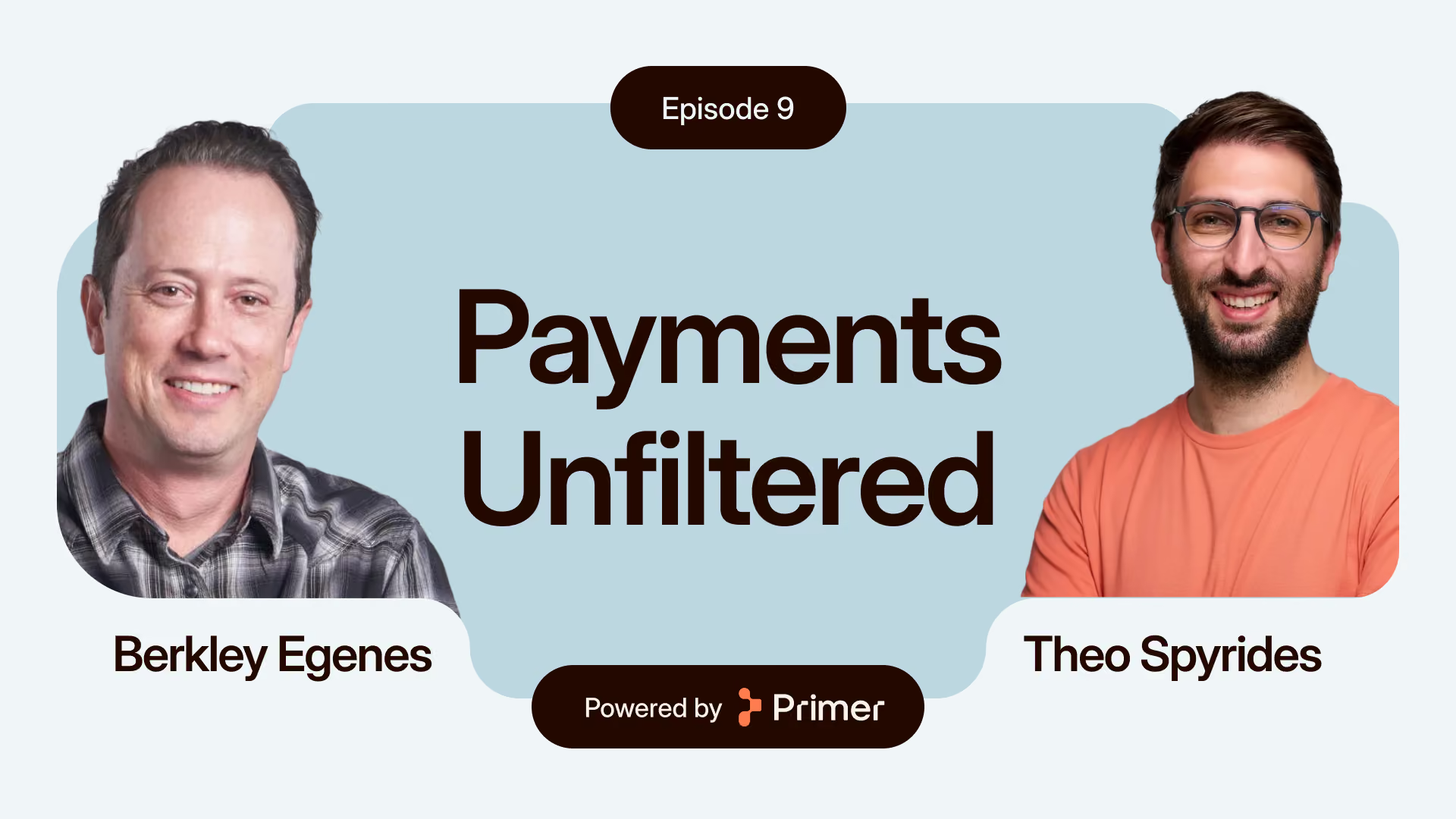
The business of play with Xsolla’s Berkley Egenes
Featuring:
Theo Spyrides
&
Berkley Egenes
Payments aren’t just infrastructure in gaming, they’re critical to the industry’s growth. From local wallets and currencies to mobile browser checkout, the way players pay now decides how studios scale. In this episode of Payments Unfiltered, Berkley Egenes, Chief Marketing & Growth Officer at Xsolla, joins host Theo Spyrides to outline a practical playbook for global game monetization.
July 31, 2025
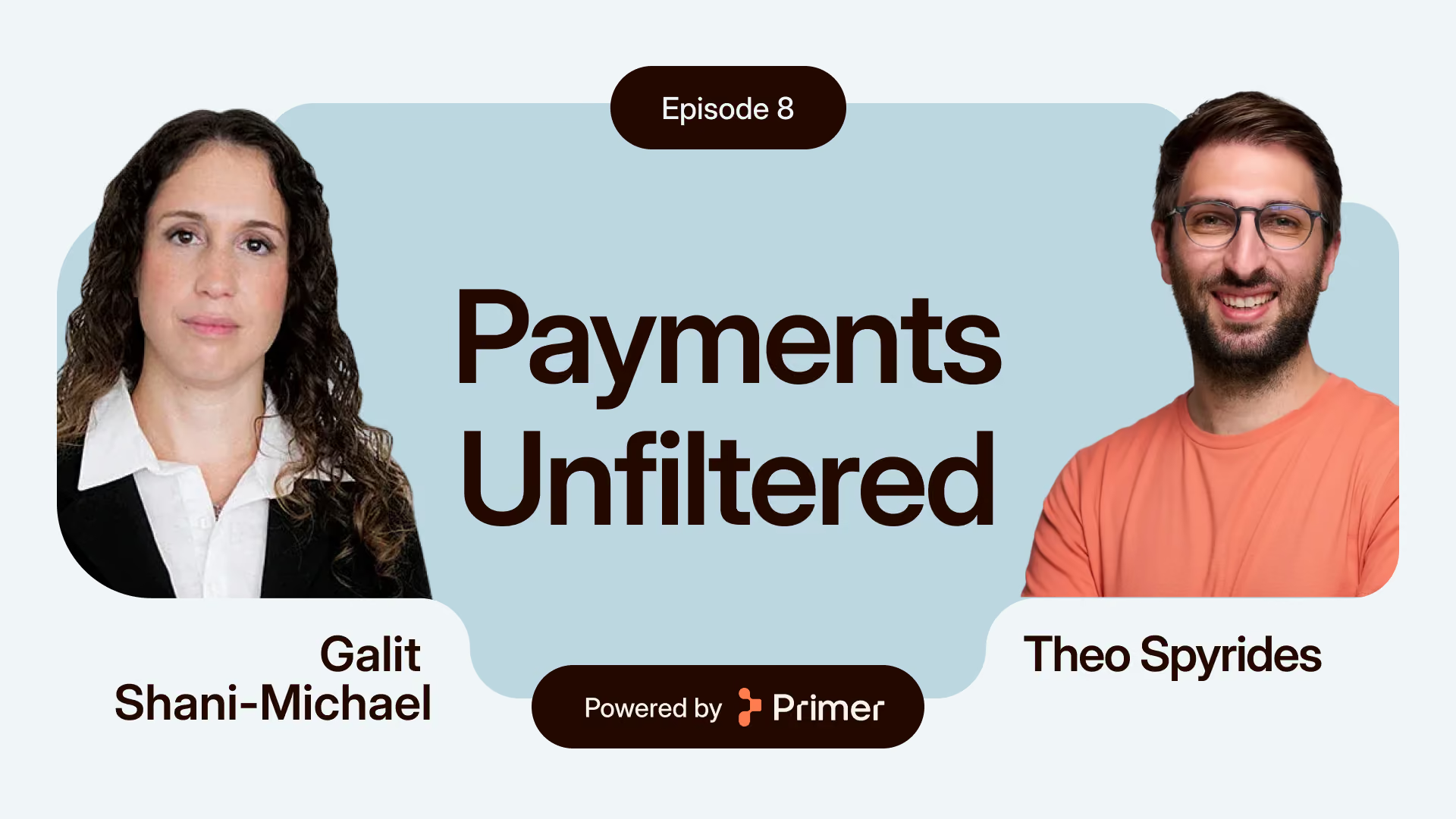
Why low fraud isn’t always a win, with Galit Shani-Michel of Forter
Featuring:
Theo Spyrides
&
Galit Shani-Michel
Low fraud and chargeback rates? Great. But what if it’s costing you customers? In this episode of Payments Unfiltered, host Theo Spyrides is joined once again by Galit Shani-Michel, VP of Emerging Products at Forter, to explore the hidden risks of a “zero fraud” mindset. From KPI misalignment to false declines and friction-filled 3DS flows, Galit explains how well-meaning fraud strategies can quietly damage conversion, customer experience, and long-term growth.
April 16, 2025
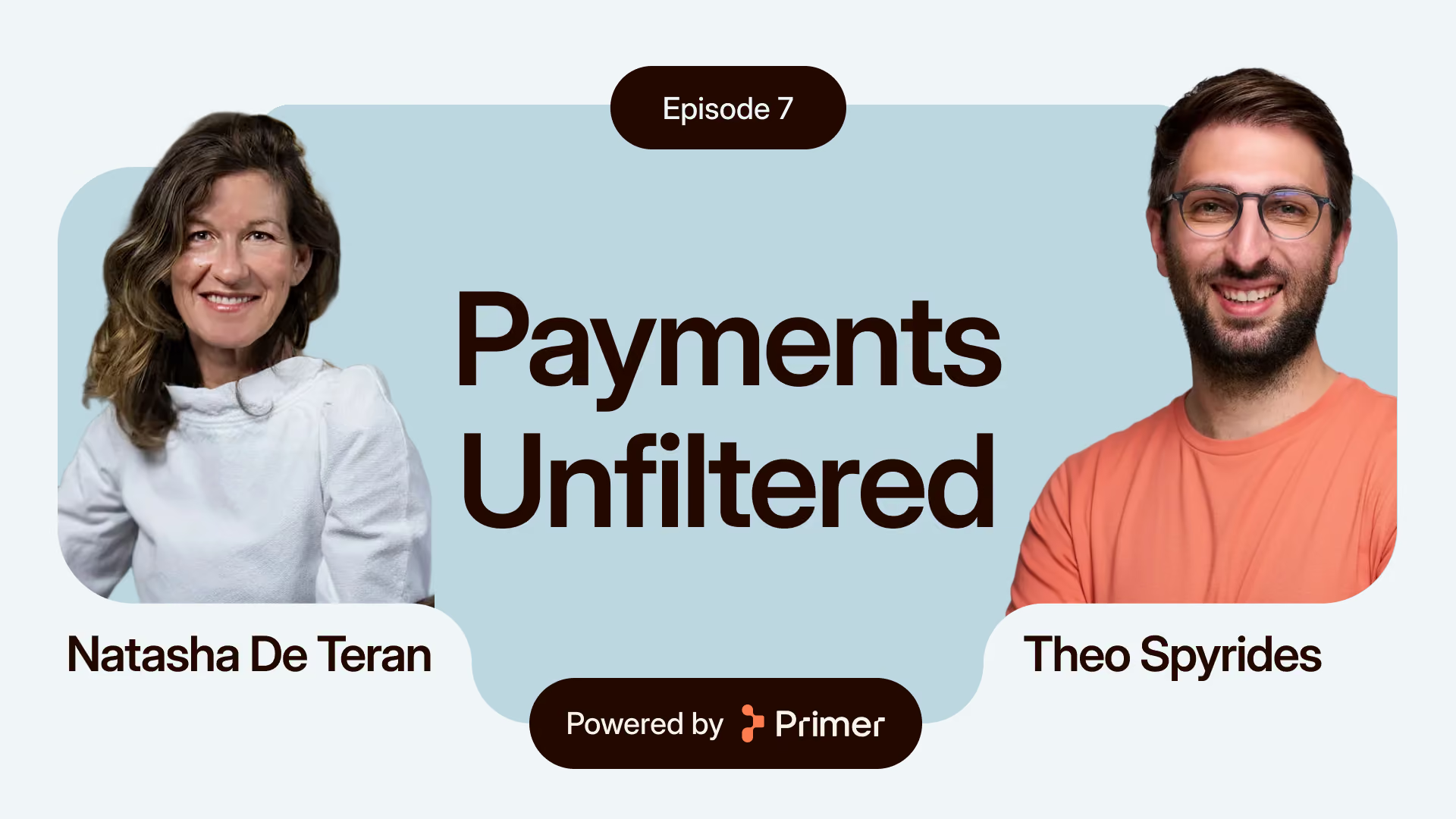
Merchants, money & the mechanics behind the scenes with Natasha de Teran
Featuring:
Theo Spyrides
&
Natasha de Teran
In this episode of Payments Unfiltered, Theo Spyrides speaks with Natasha de Teran, author of The Payoff and former Head of Corporate Affairs at SWIFT, about the hidden complexity behind everyday transactions. Together, they unpack the frictions built into today’s payment rails, the rising role of regulators, and whether CBDCs and account-to-account payments are viable challengers to cards. Natasha brings a rare blend of policy insight and hands-on merchant experience to the conversation, questioning what’s changing in payments and who those changes are actually for.