
The Middle East’s payment landscape varies significantly across the region, and each country has multiple preferred payment methods. Whether you want to serve one market well or expand into neighboring countries, this fragmentation can present logistical challenges if you’re relying on manually setting up multiple payment service providers (PSPs).
In this post, we’ll take a close look at three of the top payment orchestration platforms in the Middle East so you can choose the right solution for you.
Primer: a global Unified Payment Infrastructure platform
Since we’re writing this article, we’ll start with ourselves.
Primer is a Unified Payment Infrastructure that can simplify managing multiple processors across multiple countries.
Here’s how Primer can help:
- Supported payment methods and currencies: Primer supports nol Pay in the UAE, Apple Pay, Google Pay, and PayPal across the region, and card processing through connected acquirers. Supported currencies include AED, SAR (gated), TRY, and EGP.
- Global Accounts: Collect in local currencies across 20+ countries without setting up a legal entity in each one, reducing the FX markup your PSP charges on every cross-border conversion.
- Workflows: Build routing rules by market, card type, or transaction value without code. Test changes by splitting live traffic between two strategies before rolling out.
- Costs Overview: Standardizes fee data from every connected processor into one format, so you can compare what each processor charges across Middle Eastern markets without reconciling separate reports.
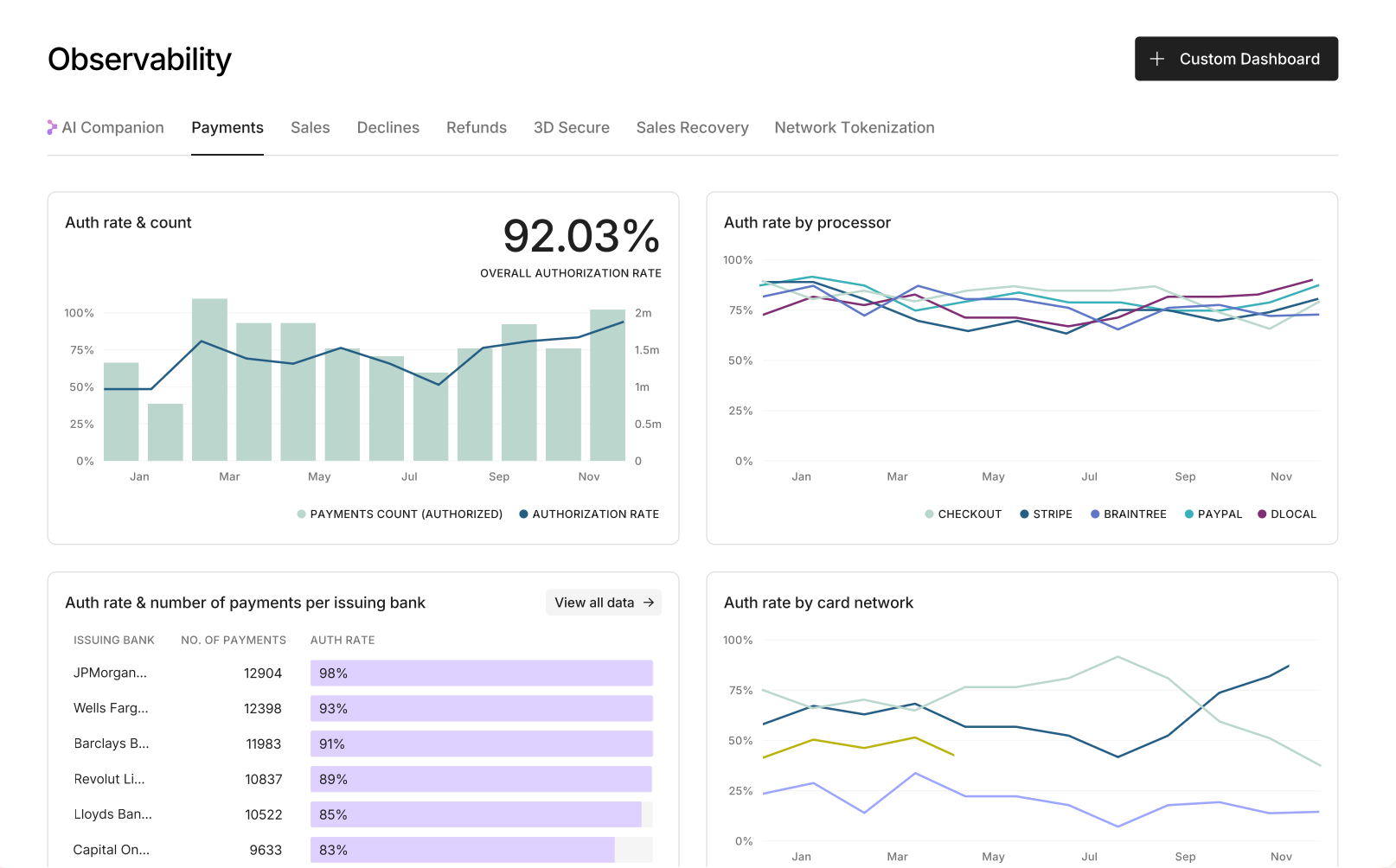
- Observability: Tracks authorization rates across processors, markets, and payment methods separately from cost data. Together with Costs Overview, this lets you see whether a cheaper routing path is also maintaining performance.
- Companion: A purpose-built AI agent that monitors your payments continuously, surfaces anomalies and opportunities, and recommends actions based on your specific processor setup and business goals. It captures over 400 data points per transaction and can implement approved changes directly.
- Fallbacks: Failed transactions reroute to a secondary processor automatically, and agnostic 3DS means the customer doesn't re-authenticate on the retry.
Yuno
Yuno, founded in Latin America, has a presence in the Middle East. It recently established regional operations through its Series B expansion, partnering with Invest Qatar.
MoneyHash
MoneyHash was built specifically for MENA and Africa. Its positioning and product development have been centered on payment infrastructure in these regions.
Run multi-market Middle Eastern payments from one integration with Primer
Primer gives Middle Eastern merchants local payment method activation, no-code routing by market, local currency collection through Global Accounts, automated fallbacks with agnostic 3DS, and unified cost and performance visibility.
Book a demo to see how Primer works for multi-market payments in the Middle East.
Frequently asked questions (FAQs) about payment orchestration platforms for the Middle East
What should you look for in a payment orchestration platform in the Middle East?
When choosing a payment orchestration solution in the Middle East, look for:
- Coverage of the specific markets you’re operating in
- Ability to route transactions by market and card type
- Local currency settlement to reduce FX costs
- Unified reporting across processors so you can compare cost and performance
Do you need a different payment processor for each Middle Eastern market?
You don’t necessarily need a different payment processor for each individual Middle Eastern market if you want to expand, but it’s often a good idea. Processor performance varies by market, so one that works well for UAE may not have good approval rates in Turkey or Egypt. A payment orchestration platform, however, can help you connect to multiple processors and route to the one that performs best in each market.