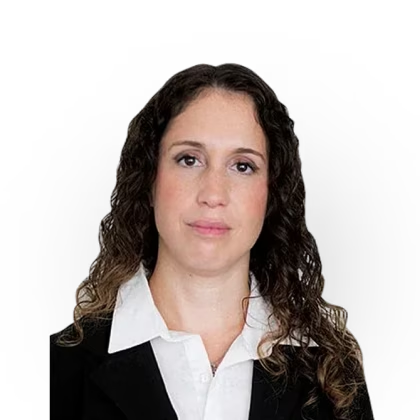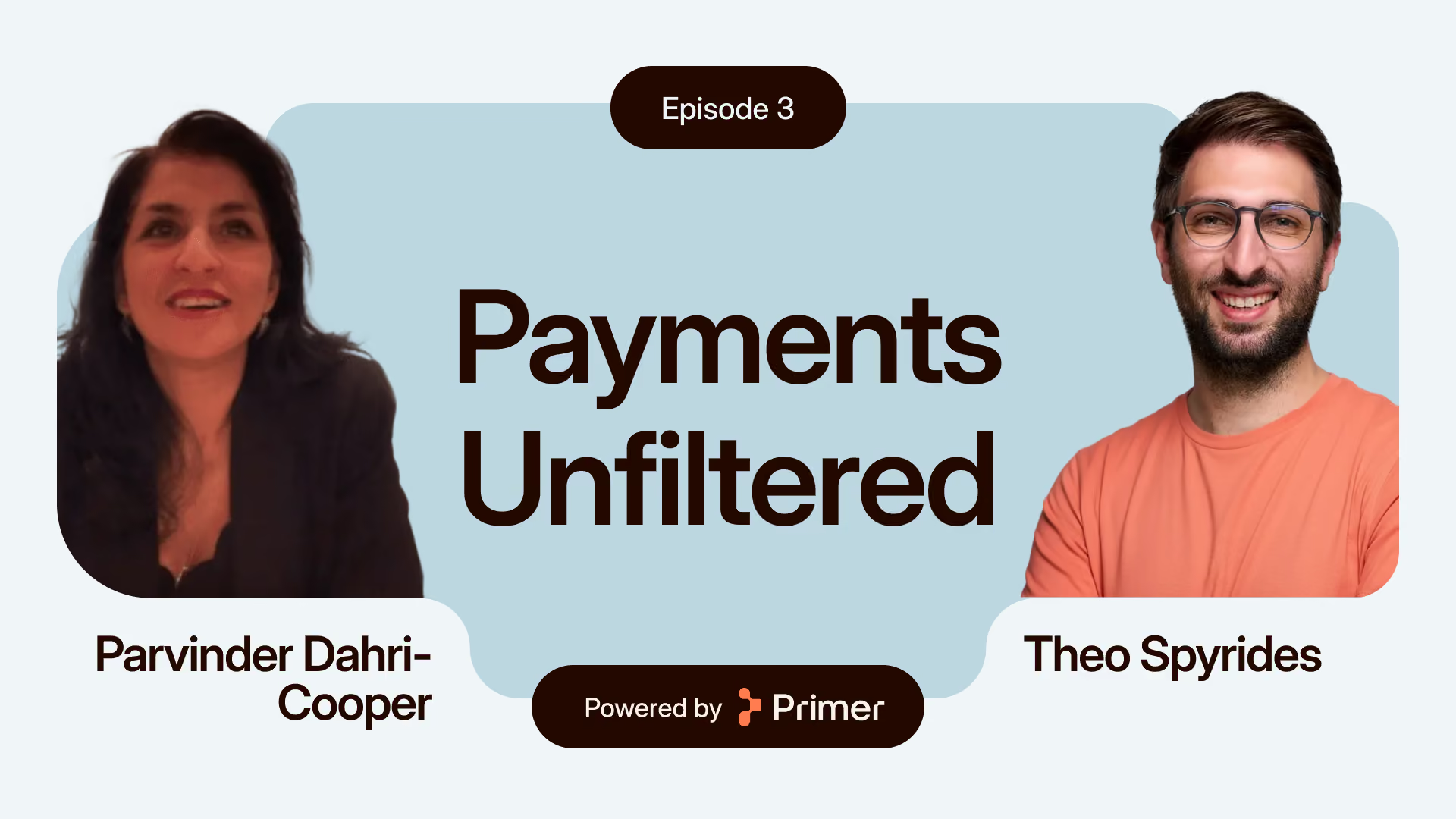
Driving change in fintech with Parvinder Dahri-Cooper
Join host Theo Spyrides as he sits down with Parvinder Dahri-Cooper to explore her extensive experience in the payments ecosystem. Parvinder shares insights from her pivotal role in taking Worldpay to IPO and discusses her impactful efforts in driving diversity, equity, and inclusion (DE&I) within the fintech industry. Discover why fintech must champion diversity and how it can lead the charge in supporting underserved communities. This episode also delves into the challenges of balancing product innovation with regulation and the potential for fintech to drive social good.

Theo Spyrides
Host of Payments Unfiltered

Parvinder Dahri-Cooper

Theo Spyrides: You've had a pretty impressive career. Twenty-five years in payments. Is "veteran" a fair description?
Parvinder Dahri-Cooper: Veteran makes it sound like I'm finished! Let's go with expert.
TS: You've spent most of your career in finance and payments. Why payments?
PDC: It wasn't the original plan. My family ran a manufacturing business, but I wanted to do something completely different. After university, I spent around ten years working in homelessness and domestic violence services, including setting up refuges for Asian and Black women. That experience taught me empathy, resilience, and how to communicate with people from very different backgrounds. Those skills have been invaluable throughout my career. Eventually, I wanted a different challenge and, if I'm honest, I wanted to earn more money. I wanted to buy a house and build a life, so I set myself the goal of getting into the city. I moved into project management in local government, then started contracting before joining Visa. From there I moved to Worldpay, and that's where I really found my place in payments. The more I learned about the industry, the more I realised payments touch every business. Every company needs to move money, so payments will always matter.
TS: You've also spoken openly about resilience. Has that been one of the biggest drivers of your career?
PDC: Absolutely. If you have goals, you just keep moving towards them. People sometimes tell me my career wasn't planned because I didn't follow the traditional graduate path. I disagree. Every move I've made has been deliberate. I've always set goals, whether that's five years, one year, or even just the next few months. My career hasn't been linear, but it has always been intentional.
TS: You've worked for a card scheme, an acquirer and a bank. Which did you enjoy the most?
PDC: They all came with different challenges, but the most rewarding work was at Worldpay when I was asked to help set up a company in the Netherlands. I'd only been there a couple of weeks and didn't have all the answers, but I enjoyed figuring it out. I'd spend late nights mapping out how the business worked, asking what needed to change, and challenging assumptions. That project ended up delivering significant savings, but more importantly it taught me a way of solving problems that I still use today. One thing I've never been afraid to do is ask the obvious questions. Sometimes that makes you feel vulnerable because people assume you should already know the answer. But asking those questions is how you get to the right solution.
TS: You were also part of the team that took Worldpay through its IPO. What was that experience like?
PDC: It was fascinating. An IPO is an enormous due diligence exercise. You're validating every part of the business, testing assumptions, and making sure everything stands up to scrutiny. People often think payments are incredibly complicated. In reality, it's about understanding how a business works and making sure the numbers, processes and controls all hold together. The due diligence process isn't that different from buying a house. You inspect everything, identify risks, and negotiate based on what you find.
TS: What role did you play during the IPO?
PDC: I was part of the programme management team, helping coordinate the work across multiple stakeholders. Programme management is often underestimated. When everything goes well, nobody notices it. But when something goes wrong, everyone does. The role is about leadership. It's making sure risks are identified early, conversations happen before problems escalate, and people work together instead of looking for someone to blame.
TS: What drew you towards compliance and regulatory work? It's not usually seen as the most exciting part of payments.
PDC: Because it doesn't directly make money. Product teams naturally want to move quickly and get features into customers' hands. Compliance teams have to ask difficult questions and sometimes slow things down. That can create tension, but it should be healthy tension. You're dealing with people's money, so regulation exists for a reason. The best businesses don't treat compliance as a final sign-off before launch. They involve compliance early so they can find practical solutions together. Fraud has grown dramatically over the last decade, so getting that balance right between innovation and customer protection has never been more important.
TS: You've been a strong advocate for diversity, equity and inclusion throughout your career. What motivates that?
PDC: I'm an Asian woman, and my experiences in this industry have shaped how I think about inclusion. For a long time, I internalised some difficult experiences and questioned whether I'd handled situations differently. Looking back, I realise many of those moments weren't about me. They reflected the environment I was working in. That's why I believe it's important to have open conversations. I won't always get everything right, but I'd rather talk about these issues than ignore them. Early in my career, I learned that understanding people is one of the most important workplace skills. Knowing your audience, listening properly, and meeting people where they are makes you a better colleague and a better leader.
TS: Do you think fintech is doing enough to improve diversity and inclusion?
PDC: There have been positive steps. Regulators are encouraging greater diversity at senior leadership level, and that's important. But I think there's still work to do. For me, one of the biggest challenges is middle management. Hiring decisions aren't just about qualifications. They're influenced by people's experiences, perspectives and emotional intelligence. We all have unconscious biases, whether we realise it or not. The first step is recognising they exist. The more exposure people have to different backgrounds and perspectives, the better decisions they'll make. That's true in hiring, leadership and creating workplaces where people genuinely feel they belong.
TS: It sounds like awareness is the starting point.
PDC: Exactly. Most people want to do the right thing. The challenge is recognising where our own blind spots might be and being willing to have honest conversations about them.
TS: Let's finish with a quick fire round. Ready?
PDC: Let's do it.
TS: Early bird or night owl?
PDC: Early bird.
TS: Tea or coffee?
PDC: Tea.
TS: Favourite payment method?
PDC: Card.
TS: North or south?
PDC: North.
TS: Favourite holiday destination?
PDC: Mumbai.
TS: In-store or online shopping?
PDC: Online.
TS: Book or film?
PDC: Film.
TS: Restaurant or takeaway?
PDC: Restaurant.
TS: Best theatre show you've seen?
PDC: Hamilton.
TS: One thing you'd change about the payments industry?
PDC: The people.
TS: You mentioned Bloom. For those who may not know, can you explain what it is?
PDC: Bloom is a concept that exists across many cultures. Speaking from an Asian perspective, it is similar to a community savings group or “kitty”. A group of people contribute money regularly, and each person takes a turn receiving the funds. Bloom has created an app that facilitates this process, specifically for communities that have traditionally been underserved by financial services. A lot of people in my community who run small and medium-sized businesses do not invest their money because they do not trust banks. Language barriers, formal processes, and a lack of culturally relevant support can make traditional financial services feel inaccessible. There are lots of opportunities for fintech to serve these communities. They may not be the biggest revenue opportunities, but you can build strong businesses by solving real problems for people who have been overlooked.
TS: What do you think fintech needs to focus on next?
PDC: For me, the most important things are connectivity and accessibility. People should have access to products that meet their specific needs and help them make their money work harder. It is about connecting people with the right information, products, and communities.
TS: Have you come across M-Pesa, the mobile payment service launched in Kenya? It is a great example of fintech creating real impact. It enabled people who were previously unbanked to make payments through their mobile phones. It is the kind of innovation we should celebrate more because it shows how technology can improve financial inclusion. We have talked about the positive impact fintech can have. Are there areas where you think it has created challenges?
PDC: I am concerned about some aspects of buy now, pay later. The underlying payment rails have not changed, it is still a form of credit. I think there is a risk that people use it without fully understanding the consequences. There are also wider questions around financial education. People need to understand what they are signing up for and how products like these can impact their finances.
TS: Almost half of 18 to 30-year-olds do not know Buy Now, Pay Later providers can charge missed payment fees, and 46% do not realize they could get into debt. How do we address that?
PDC: It comes back to education. People should learn about money much earlier, including things like saving, investing, mortgages, and managing credit. Financial education should not just focus on traditional milestones like buying a house. People need to understand the different ways they can use money to build the life they want.
TS: Do you think the way people think about money needs to change?
PDC: Absolutely. The mindset around money is changing. Just as people are questioning traditional paths like university or home ownership, they should also rethink how they manage their finances. It is about helping people understand their options and feel confident making decisions with their money.
TS: You were involved with the Cash Action Group in 2021, which looked at preserving access to cash. What are your thoughts on the move towards a cashless society?
PDC: I do not think cash will disappear overnight. A lot of people who rely on cash are in rural areas or communities where access to digital services is more limited. The challenge is making sure that the transition does not leave people behind. There needs to be support in place for those who are less comfortable with digital payments or who rely on cash for their everyday lives.
TS: Do you think moving towards a cashless society is the right thing for society?
PDC: Change is inevitable, and we are always going to adapt as technology evolves. The important thing is making sure that the right resources and support systems are available so that the transition happens with minimal impact on people.
TS: Thanks so much for joining us.
PDC: Thank you.
Meeting with the best in the business
Primer puts you in control of how money moves across the business. With our unified infrastructure you can orchestrate every flow, reduce friction, and capture more revenue everywhere.







Latest episodes
July 23, 2026
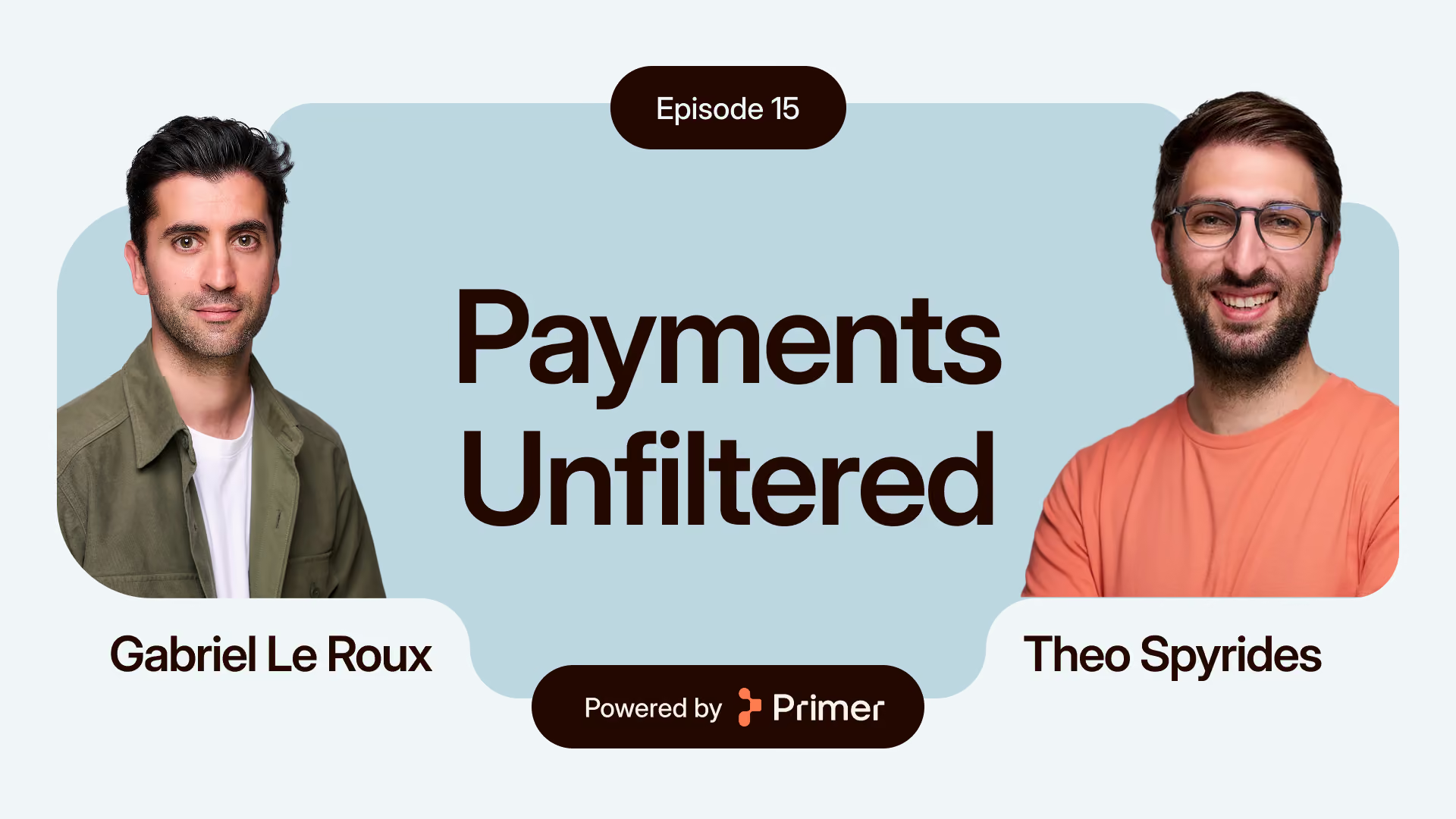
The next era of payments: AI, data & the end of the “black box”
Featuring:
Theo Spyrides
&
Gabriel Le Roux
In this episode of Payments Unfiltered, Theo Spyrides sits down with our co-founder and CEO Gabriel Le Roux to discuss where payments are heading next, why AI in payments is more about context than prompts, and what payments intelligence actually looks like in practice for merchants.
.avif)
June 15, 2026
Everything merchants need to know about chargebacks with Chargeblast’s Qi Cao
Featuring:
Theo Spyrides
&
Qi Cao
Most merchants think hitting their chargeback target means they're safe. Spoiler alert: they're not. In this episode of Payments Unfiltered, Theo Spyrides speaks with Qi Cao, co-founder and CEO of Chargeblast, to unpack chargebacks, what the Visa Acquiring Monitoring Program (VAMP) actually means for merchants, and why the merchants who manage disputes best are the ones who've already fixed their business model.
April 30, 2026
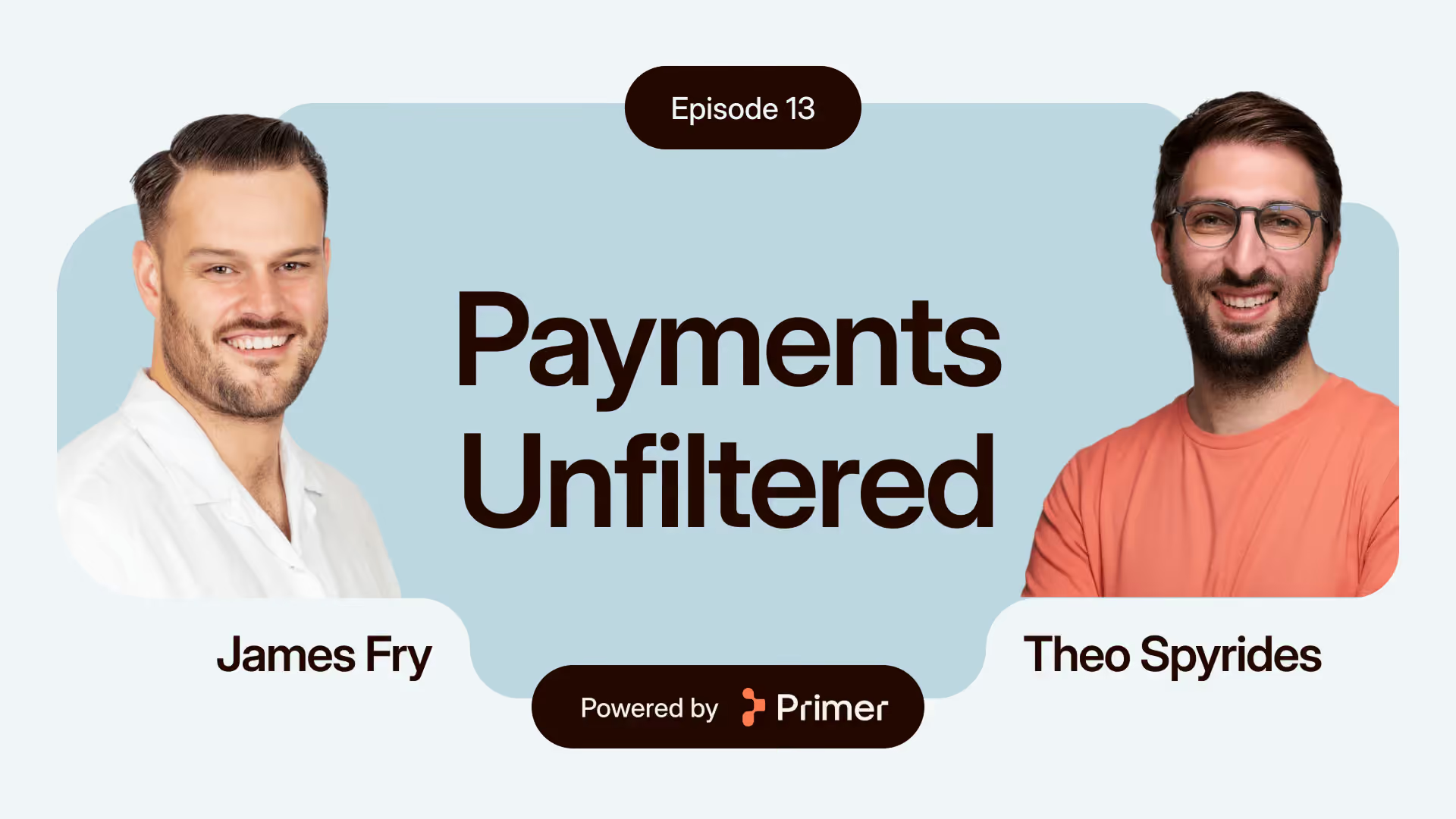
What is really takes to build and run a PSP at global scale with Worldpay’s James Fry
Featuring:
Theo Spyrides
&
James Fry
This is Part 2 of our conversation with James Fry, Head of Enterprise Product at Worldpay (now part of Global Payments). Most people know what a PSP does. Far fewer know what it actually takes to build and run one. In this episode of Payments Unfiltered, Theo Spyrides, VP of Product at Primer, and James pull back the curtain. James also shares how he thinks about structuring product teams inside a large payments organization and his advice for anyone building payment technology today.
March 19, 2026
From commodity to competitive advantage with James Fry at Worldpay
Featuring:
Theo Spyrides
&
James Fry
In this episode of Payments Unfiltered, Theo Spyrides, Head of Product at Primer, sits down with James Fry, Head of Enterprise Product at Worldpay (now part of Global Payments), to explore how merchants have evolved their approach to payments, and what that means for the payment providers supporting them. James also shares his perspective on two of the biggest trends reshaping the space: stablecoins as an additional payments rail for global merchants, and agentic commerce as a new channel that will require the industry to solve for trusted agents, fragmented protocols, and a whole new model of intent verification.
February 19, 2026
The shifts reshaping enterprise payments with Citi’s Will Artingstall
Featuring:
Theo Spyrides
&
Will Artingstall
In this episode of Payments Unfiltered, Theo Spyrides, Head of Product at Primer, is joined by Will Artingstall, Global Head of Digital Asset Payments and ecommerce Services at Citi. Will shares how Citi is working more closely with enterprise merchants as payment flows become more complex and new rails begin to emerge. They discuss how large organizations are approaching these changes in practice, and what it means for how payments are designed and managed.
January 21, 2026
How AI shoppers are forcing merchants to rethink fraud with Riskified’s Jeff Otto
Featuring:
Theo Spyrides
&
Jeff Otto
In this episode of Payments Unfiltered, Theo Spyrides, Head of Product at Primer, sits down with Jeff Otto, CMO at Riskified, to explore what happens when software starts acting on behalf of customers and what that means for risk, fraud, and merchant exposure. They discuss how agentic commerce changes who initiates a transaction, how trust is established, and why introducing an agent into the flow raises new questions around risk ownership and liability.
September 24, 2025
The business of play with Xsolla’s Berkley Egenes
Featuring:
Theo Spyrides
&
Berkley Egenes
Payments aren’t just infrastructure in gaming, they’re critical to the industry’s growth. From local wallets and currencies to mobile browser checkout, the way players pay now decides how studios scale. In this episode of Payments Unfiltered, Berkley Egenes, Chief Marketing & Growth Officer at Xsolla, joins host Theo Spyrides to outline a practical playbook for global game monetization.
July 31, 2025
Why low fraud isn’t always a win, with Galit Shani-Michel of Forter
Featuring:
Theo Spyrides
&
Galit Shani-Michel
Low fraud and chargeback rates? Great. But what if it’s costing you customers? In this episode of Payments Unfiltered, host Theo Spyrides is joined once again by Galit Shani-Michel, VP of Emerging Products at Forter, to explore the hidden risks of a “zero fraud” mindset. From KPI misalignment to false declines and friction-filled 3DS flows, Galit explains how well-meaning fraud strategies can quietly damage conversion, customer experience, and long-term growth.
April 16, 2025
Merchants, money & the mechanics behind the scenes with Natasha de Teran
Featuring:
Theo Spyrides
&
Natasha de Teran
In this episode of Payments Unfiltered, Theo Spyrides speaks with Natasha de Teran, author of The Payoff and former Head of Corporate Affairs at SWIFT, about the hidden complexity behind everyday transactions. Together, they unpack the frictions built into today’s payment rails, the rising role of regulators, and whether CBDCs and account-to-account payments are viable challengers to cards. Natasha brings a rare blend of policy insight and hands-on merchant experience to the conversation, questioning what’s changing in payments and who those changes are actually for.