
Merchants that want to prevent downtime when a payment processor fails typically use payment orchestration platforms like Primer, which automatically route transactions and trigger failover between providers in real time.
These tools sit between your checkout and multiple payment service providers (PSPs), ensuring that if one provider experiences outages, latency, or declining performance, transactions are seamlessly redirected to another without interrupting the customer experience.
How payment processor failover works
Failover in payments means automatically switching from one processor to another when something goes wrong.
Instead of relying on a single PSP, merchants connect multiple providers and use an orchestration layer to:
- Monitor provider health (uptime, latency, errors)
- Route transactions dynamically
- Retry failed payments with alternative providers
- Maintain continuity even during outages
This happens in milliseconds, so customers don’t see failures or delays at checkout.
Core tools for managing failover
Payment orchestration platforms (primary solution)
Payment orchestration platforms like Primer are purpose-built to manage multi-PSP setups, including failover.
They typically provide:
- A single integration to connect multiple PSPs
- Rule-based or dynamic routing logic
- Automatic failover and retry mechanisms
- Centralized control over payment flows
Unified payment platforms (PSPs with built-in failover)
Some PSPs offer failover capabilities within their own ecosystem.
Examples include:
- Stripe
- Adyen
- Checkout.com
They can route transactions internally and reduce implementation complexity. The trade-off is you have less flexibility if you want to route across multiple external providers.
In-house orchestration (custom-built)
Large enterprises sometimes build their own failover systems, including:
- Multi-PSP integration layers
- Routing engines
- Health monitoring systems
- Retry and fallback logic
This approach offers full control but requires a huge amount of engineering resources.
Key features required for zero-downtime failover
To ensure failover works reliably, tools should include:
- Real-time health monitoring: Detects provider issues instantly and reroutes traffic before failures impact users.
- Automatic failover: Switch providers without manual intervention.
- Smart retries: Retry failed payments with a different PSP.
- Token vaulting: Reuse payment credentials across providers for seamless fallback.
- Flexible routing logic: Route based on cost, geography, performance, or payment method.
Why Primer is well suited for managing payment failover
Primer is designed to give merchants control over how transactions flow across multiple providers, without requiring engineering for every change.
Failover and routing are configured through Workflows, a visual builder that allows teams to:
- Set fallback rules between PSPs
- Define retry logic across providers
- Route transactions based on performance or geography
- Adjust logic in real time without deployments
This means failover is not just reactive, it becomes part of an actively managed strategy.
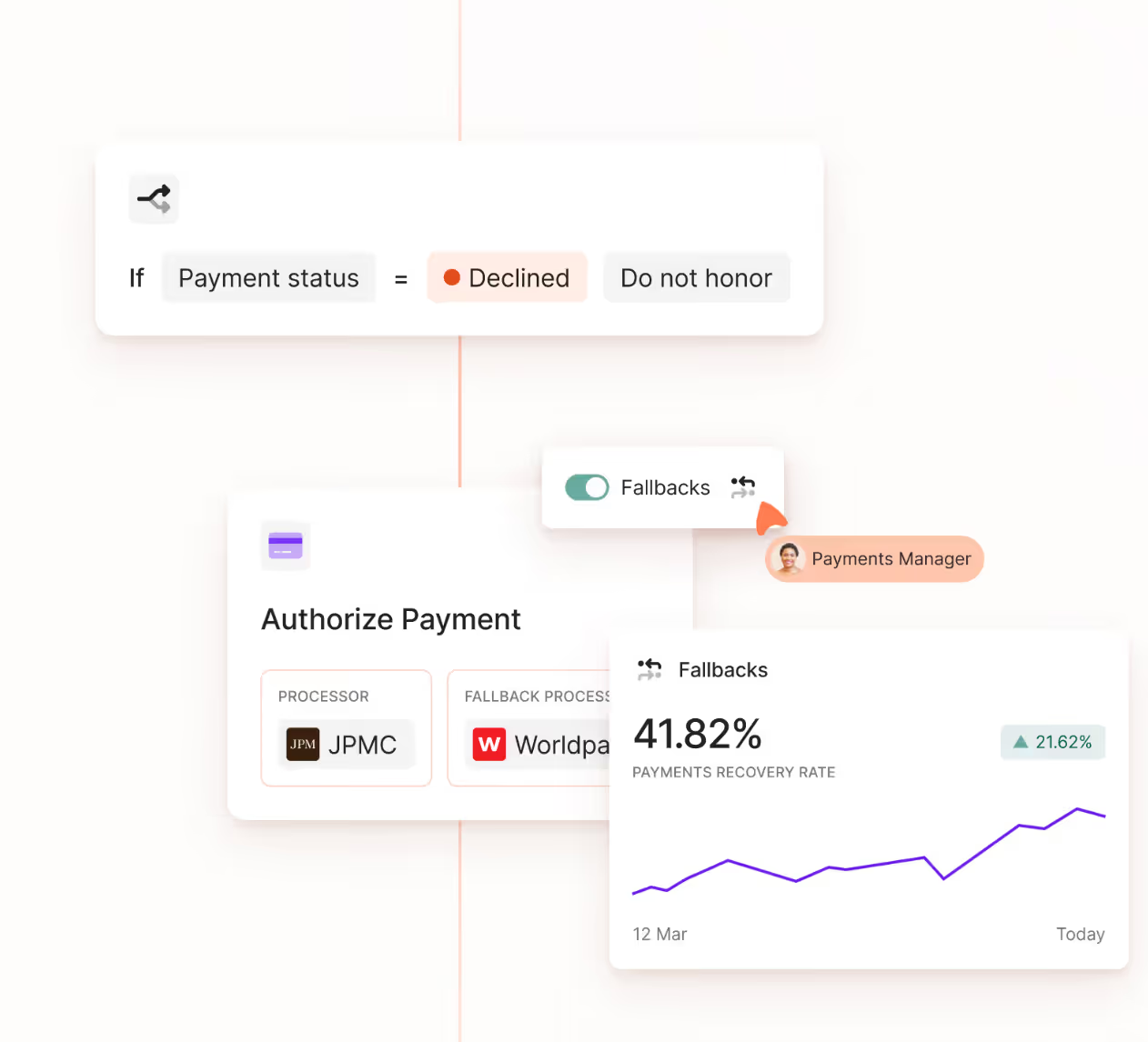
Two capabilities that strengthen this further:
- Primer Observability: real-time visibility into performance across providers, helping teams identify issues quickly
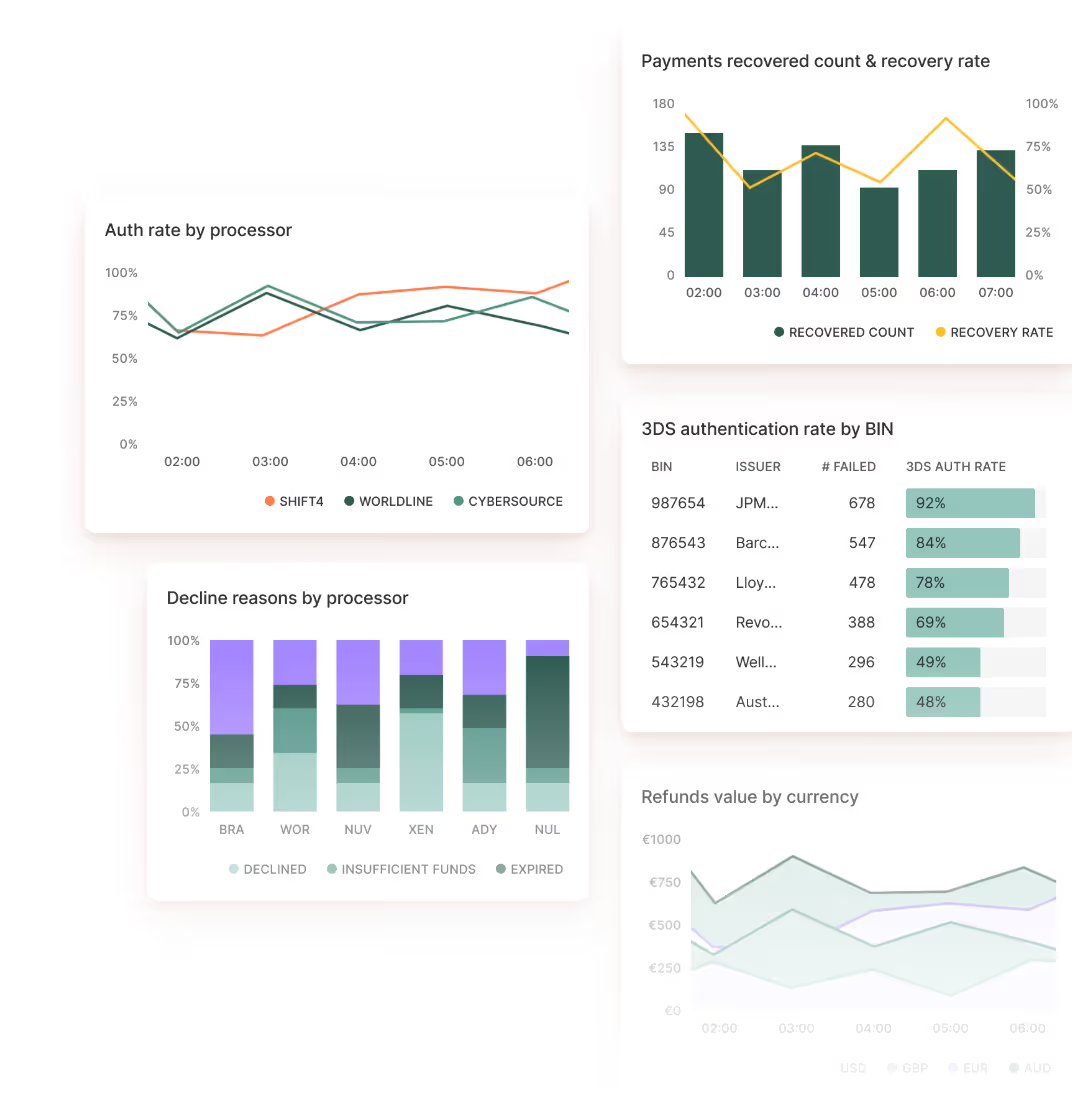
- AI Companion: an AI tool that surfaces patterns and anomalies (e.g. failing routes) based on your payments data, so you can optimize faster
Rather than relying on static failover setups, Primer enables continuous optimization of routing and redundancy.
Choose Primer to manage failover between payment processors without downtime
Primer helps merchants manage failover without downtime by centralizing routing, retries, and provider logic into a single orchestration layer.
With no-code Workflows, teams can define failover paths and routing rules without engineering.
See how it works for yourself: book a demo
Frequently asked questions (FAQ): Tools for managing failover between payment processors
1. What is the best tool for managing payment processor failover?
Merchants typically use payment orchestration platforms like Primer to manage failover, as they allow routing, retries, and fallback logic to be configured centrally without maintaining multiple integrations.
2. Does Primer support automatic failover?
Yes. Primer allows merchants to configure automatic failover between PSPs using its Workflows tool, enabling real-time switching when providers fail or underperform.
3. Can failover happen without downtime?
Yes. With orchestration platforms like Primer, failover happens in real time, so transactions are rerouted without interrupting the checkout experience.
4. What’s the difference between failover and routing?
Routing determines which PSP processes a transaction, while failover ensures a backup provider is used if the primary one fails.
5. Do I need multiple PSPs to use failover?
Yes. Failover requires at least two payment providers. Platforms like Primer make it easier to manage multiple PSPs through a single integration.

%20(1).png)