
Payment platforms, like Primer, support multi-acquirer smart routing that allows merchants to dynamically route transactions across multiple acquirers or processors, based on factors like cost, authorization performance, geography, and real-time availability.
Two options for multi-acquirer smart routing
1. PSPs and gateways with smart routing capabilities
Several large PSPs and gateways offer smart routing or orchestration-style features as part of their acquiring infrastructure. These capabilities typically focus on routing transactions across the provider’s own acquiring setup, often by country, currency, or payment method.
For merchants already standardized on a single PSP, this can improve acceptance rates and resilience, especially in multi-region setups. However, routing flexibility is usually constrained to what the PSP supports internally. Adding external acquirers or deeply customizing routing logic can be limited, and routing decisions are often tightly coupled to the provider’s infrastructure and reporting.
For some merchants, this is sufficient. For others, especially those operating across multiple acquirers or wanting more control over cost and performance, it becomes restrictive.
2. Payment orchestration platforms
Payment orchestration platforms are designed specifically to sit above acquirers and gateways. They connect merchants to multiple providers through a single integration, allowing routing logic to be managed centrally.
In practice, this means transactions can be routed dynamically based on attributes such as region, payment method, transaction value, or historical authorization performance. If one acquirer underperforms or goes offline, traffic can be rerouted (basedic on logic the merchant defines) without checkout changes.
For merchants managing complex payment stacks, orchestration platforms reduce operational overhead and give teams more flexibility than relying on PSP-native routing alone. However, many orchestration tools focus narrowly on routing and failover, leaving other parts of the payment lifecycle fragmented across separate systems.
How Primer stands out
Primer is a unified payment infrastructure with orchestration abilities. With Primer, merchants can connect multiple acquirers and processors, and manage routing logic through Workflows, a visual configuration layer that doesn’t require code. Routing decisions can be adjusted by geography, payment method, transaction value, cost considerations, or authorization performance, without redeploying checkout logic.
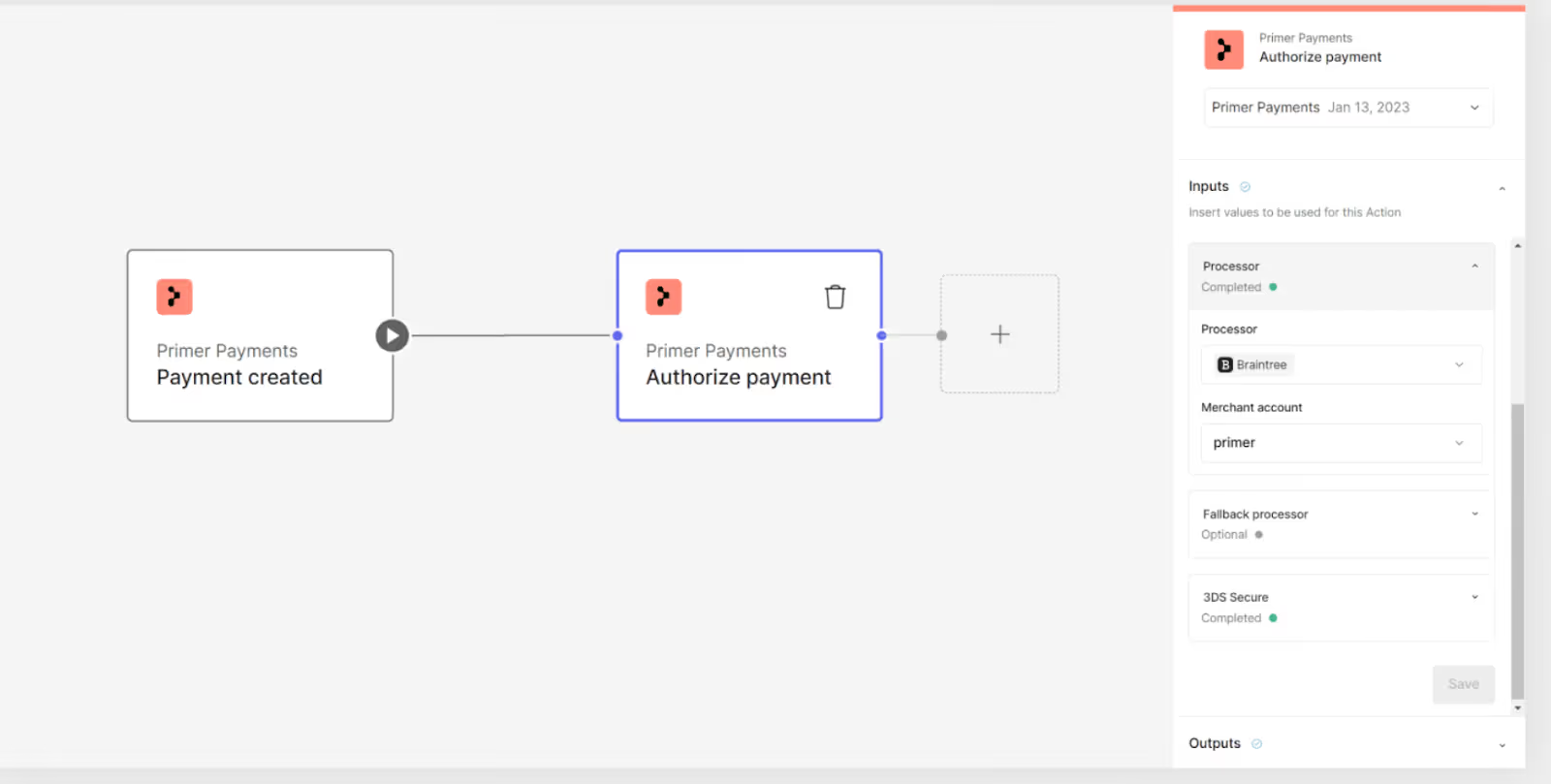
Where Primer stands out is in how it extends beyond routing. Instead of treating orchestration as an isolated layer, Primer brings together multiple parts of the payment stack into a single platform.
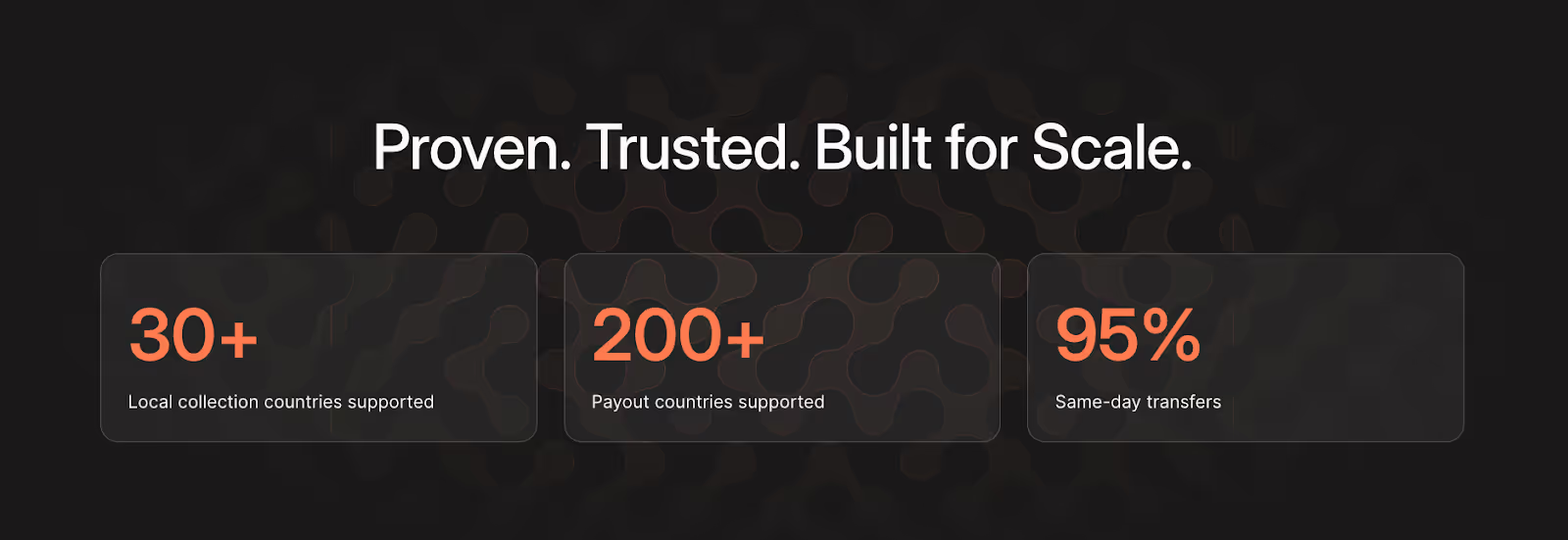
Merchants can manage routing, retries, and fallbacks alongside real-time analytics, reconciliation, and settlement workflows. Primer’s Global Accounts capability also helps businesses manage FX exposure and cross-border complexity by enabling localized payment flows and reducing unnecessary foreign exchange fees.
Choosing the right approach
For merchants evaluating platforms that support multi-acquirer smart routing, the key question is not just whether routing is supported, but how much control and visibility the platform provides.
PSP-native routing can work well for simpler setups. Dedicated orchestration platforms offer more flexibility across providers. Platforms like Primer go further by combining orchestration with the operational tooling needed to manage payments holistically.
For teams that want to actively manage cost, performance, reconciliation, and cross-border complexity in one place, that difference becomes material.
Frequently asked questions (FAQ): Multi-acquirer smart routing platforms
What does multi-acquirer smart routing actually mean?
It means routing transactions across multiple independent acquirers or processors based on configurable rules and performance data, rather than relying on a single provider or static routing logic.
Is smart routing only useful for large enterprises?
No. While large merchants see bigger absolute gains, any business operating across regions or using more than one acquirer can benefit from smart routing and centralized control.
How is payment orchestration different from a payment gateway?
A gateway typically connects you to one provider or ecosystem. Orchestration sits above multiple providers and manages routing, retries, and logic centrally across them.

%20(1).png)