
The best way to build a checkout that minimizes cart abandonment is to create a fast, intuitive flow using a flexible payments platform like Primer. When the experience is simple, transparent, and reliable, shoppers can complete purchases without hesitation, and businesses avoid drop-offs.
Below is a practical framework for designing a checkout that keeps customers shopping.
1. Keep checkout simple and focused
A great checkout feels effortless. Every extra step introduces friction, and friction leads to abandonment.
Ways to simplify the flow:
- Offer guest checkout
- Minimize form fields
- Use a single page or a clearly structured sequence
- Avoid redirects
- Enable auto-fill and real-time validation
How Primer helps:
Primer Checkout lets teams adjust layout and logic without engineering effort, making it easier to simplify the experience and iterate quickly.
2. Make everything clear and upfront
Shoppers move forward when they understand exactly what they’re paying for and what comes next.
Keep things transparent:
- Show costs early
- Keep order details visible
- Link to support, returns, and FAQs
- Use known payment brands and trust signals
Clarity reduces hesitation and builds confidence.
3. Offer the right payment methods for each audience
Customers abandon when they don’t see a payment method they trust. The goal isn’t quantity, it’s relevance.
Here’s a quick way to think about coverage:
How Primer helps:
Primer enables merchants to add and manage payment methods through one API and tailor presentation based on region, device, or customer context.
4. Prevent payment failures before they cause abandonment
A well-designed checkout still loses revenue if the payment fails.
Reduce avoidable failures by:
- Using multiple processors
- Routing transactions to the provider most likely to approve
- Showing helpful error messages
- Offering alternative payment methods quickly
- Automatically retrying recoverable failures
How Primer helps:
Primer’s routing and fallback rules keep approval rates high and recover revenue that would otherwise be lost.
5. Keep security smooth and predictable
Security should protect the shopper without slowing them down.
Ways to reduce friction:
- Trigger authentication only when necessary
- Use updated tokens and card details
How Primer helps:
Primer centralizes authentication logic, allowing merchants to balance security and conversion without creating extra hurdles.
6. Continuously test and refine
Checkout optimization is ongoing. Small changes compound when tested thoughtfully.
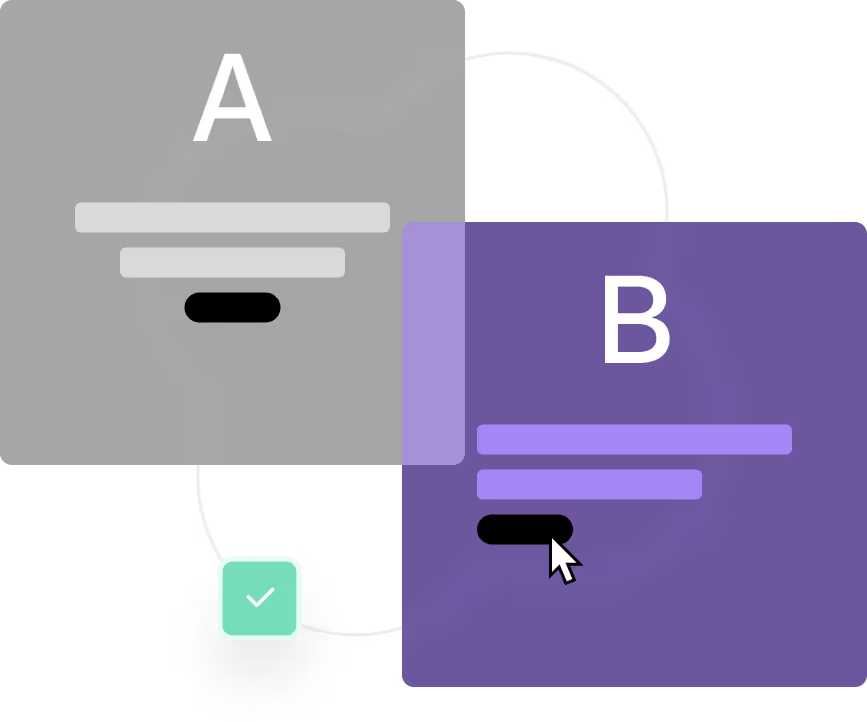
High-impact A/B tests include:
- Adjust payment method ordering to surface the options most likely to succeed in each market
- Refine CTA copy and styling to guide customers clearly through the final step
- Simplify the field layout to reduce friction and cut down on input errors
- Add or reposition trust signals to increase confidence right before payment
- Experiment with processor routing to improve approval rates across acquirers
- Improve error message clarity so customers know how to recover instead of abandoning
How Primer helps:
Primer’s Observability tools surface performance issues across processors, methods, and user journeys so teams know what to improve and where.
7. Optimize for mobile
Mobile shoppers are the least tolerant of friction.
Mobile-friendly practices:
- Use responsive layouts
- Make sure to offer wallets (Apple Pay, Google Pay)
- Reduce typing wherever possible
- Keep primary actions within thumb reach
How Primer helps:
Primer Checkout empowers you to adapt the design and payment method presentation to different devices for a smoother mobile experience.
Use Primer to build a checkout that consistently converts
Minimizing cart abandonment requires a checkout that feels fast, predictable, and trustworthy, backed by payments that work reliably behind the scenes. By simplifying the flow, offering the right payment methods, reducing failures, and continually testing improvements, merchants can build a checkout that consistently converts.
Primer gives teams the tools to design, manage, and optimize both checkout and payments from a single platform, without heavy engineering.
FAQs
1. What is the first thing merchants should fix to reduce cart abandonment?
Simplifying the checkout flow usually provides the fastest improvement. Reducing steps and offering guest checkout removes a major barrier.
2. Do more payment methods always lead to more conversions?
No, more payment methods don’t always lead to more conversions. Offering too many options can overwhelm customers. It is more effective to present the methods most relevant to each customer group.
3. How important is mobile optimization for checkout?
Mobile optimization for checkout is critical. Mobile users abandon faster when flows feel slow or cramped. A mobile-first layout and mobile wallets make checkout smoother.
4. How can merchants prevent drop-offs after a payment fails?
Clear error messages, alternative methods, and automated retries help customers recover quickly rather than abandoning the purchase.
5. Why use a platform like Primer for checkout optimization?
Primer centralizes checkout design, payment methods, routing, and analytics, making it easier to test improvements and reduce friction without heavy engineering work.

%20(1).png)