
As Europe's second-largest ecommerce market, German consumers have distinct preferences when it comes to how they pay online.
Low credit card usage, a deep-rooted trust in invoice-based payments, and overwhelming PayPal adoption mean that merchants can't simply copy-paste their payment setup from other markets.
This guide covers the essential payment methods you need to succeed in Germany, and shows you an easier way to add them to your payment stack.
Ready to start adding German payment methods without the engineering lift? Book a call with the Primer team to learn more.
The most popular payment methods in Germany
With Germany's ecommerce market expected to hit €91 billion in 2025, there's significant opportunity for merchants expanding into the region. However, getting your payment mix right is crucial.
A recent study found that 82% of German shoppers will abandon their cart if their preferred payment method isn't available. Getting your payment mix right is essential.
Here are the payment methods that matter most in Germany, and why merchants should offer them.
1. PayPal
PayPal dominates German ecommerce. Roughly 90% of German online shoppers have used PayPal, and it accounted for approximately 28% of all online transactions in 2023.
Why merchants should offer PayPal
Germans value security and privacy when shopping online. PayPal lets customers complete purchases without sharing bank details directly with merchants, which builds trust. The platform's buyer protection program adds another layer of confidence for cautious shoppers.
For merchants entering Germany, PayPal is non-negotiable. It's the payment method German consumers expect to see at checkout, and its absence will likely cost you conversions.
2. Klarna and Buy Now, Pay Later (BNPL)
Klarna has deep roots in the German market. The company acquired popular German bank transfer service SOFORT in 2014, and has since become one of the most trusted payment brands in the country.
Why merchants should offer BNPL
German consumers have a long history with "pay later" options, dating back to the catalog shopping era when companies like Otto and Quelle allowed customers to receive goods before paying. Klarna modernizes this tradition with flexible options: pay in 30 days, split payments into installments, or access longer-term financing.
Klarna's BNPL services has 10x higher market share in Sweden and Germany compared to global ecommerce payments overall. Germany's BNPL market is projected to grow from $62 billion in 2024 to over $103 billion by 2030. Offering Klarna helps you tap into this demand while reducing friction at checkout.
Read more: BNPL: A merchant's guide
3. Digital wallets (Apple Pay, Google Pay, Amazon Pay)
As of 2023, 17% of German consumers use Apple Pay, 17% use Google Pay, and 28% use Amazon Pay for purchases. Adoption is growing quickly, particularly among younger shoppers and for mobile commerce.
Why merchants should offer digital wallets
Digital wallets reduce checkout friction by eliminating the need to enter card details manually. For mobile shoppers especially, the ability to authenticate with Face ID or a fingerprint speeds up the purchase flow and can lift conversion rates.
A note on Giropay: Giropay, once a popular bank-based payment method in Germany, was wound up at the end of 2024. Merchants who previously relied on Giropay should now look to PayPal or direct SEPA integration as alternatives for account-to-account payments.
Germany’s payment landscape is also evolving as European account-to-account payment schemes mature. One example is Wero, the digital wallet backed by the European Payments Initiative, which is designed to support instant account-to-account payments across Europe. While adoption is still developing, merchants expanding across the region should keep an eye on Wero as part of the broader shift toward European digital payment methods.
Read more: Wero payment method explained: the new European wallet replacing iDEAL and Payconiq
4. SEPA Direct Debit (Lastschrift)
SEPA Direct Debit accounts for approximately 17% of German online purchases. It allows merchants to pull funds directly from a customer's bank account after receiving authorization.
Why merchants should offer Direct Debit
Direct debit is particularly valuable for subscription businesses and recurring payments. German consumers are comfortable with the format: it's how many pay their rent, utilities, and insurance. For merchants, it offers lower transaction fees compared to card payments and reliable collection once mandates are in place.
The trade-off is that SEPA Direct Debit requires mandate management and has a longer settlement window than instant payment methods.
5. Credit and debit cards
Cards account for only about 11% of German online purchases, significantly lower than markets like the UK or US. Only around 35% of Germans own a credit card.
Why merchants should offer cards
Despite lower domestic usage, cards remain important for international customers shopping on German sites. Visa and Mastercard debit cards are growing in popularity, particularly among younger consumers. Girocard, the dominant domestic debit card with over 100 million cards in circulation, historically didn't work for online payments, though this is slowly changing.
Cards shouldn't be your primary focus in Germany, but they're a necessary part of a complete checkout.
The challenge of managing multiple payment methods
To serve German customers effectively, merchants need to support PayPal, Klarna, SEPA Direct Debit, cards, and digital wallets at minimum. That's at least five different payment methods, and potentially multiple payment service providers (PSPs) to access them.
Some payment methods can be integrated directly (Klarna, for example), while others require a specific PSP to access them. This creates real challenges for growing businesses, including:
Engineering becomes a bottleneck, at integration and beyond
Each new payment method or PSP integration requires development work: researching the API, building the integration, testing, and launching. A single integration can take weeks or months, delaying your market entry.
Payment providers update their APIs, change their requirements, and deprecate features. Someone on your team has to track and respond to these changes across every integration you maintain.
Data is fragmented, making it performance comparison a manual burden
Each PSP has its own dashboard with its own metrics, formatting, and terminology. Comparing performance across providers means logging into multiple systems and manually reconciling data. When you're processing hundreds of thousands of transactions, this becomes a significant operational burden.
Costs add up due to multi-provider complexity
If you need to add multiple PSPs to offer the payment method mix you need in Germany, you might have to convert currencies and pay cross-border fees. As transaction volume grows, these inefficiencies eat into your margins.
This is where a unified payment infrastructure comes in.
How Primer makes it simple to expand into Germany
Primer puts payment teams in control of how money moves across their entire business: from adding new payment methods and checkout design, to managing FX and reconciliation.
Instead of building and maintaining separate integrations, you connect once to Primer and gain access to everything you need.
Here's how Primer helps merchants scale into Germany and beyond:
Add new payment methods with no coding
With Primer, you can integrate new payment methods without engineering resources. Activating PayPal, Klarna, or SEPA Direct Debit is as simple as logging into your dashboard and selecting the method you want.
This means payment managers can handle integrations directly, freeing up your engineering team to focus on other priorities. What used to take months can now be completed in just a few minutes.
If you need to integrate with a new PSP to access a specific payment method, Primer simplifies that process too. A single integration unlocks a range of local and global payment processors, with no separate builds required.
Customize your checkout with Primer Checkout
Primer Checkout lets you configure which payment methods appear at checkout based on customer attributes, region, cart value, and custom logic. You can ensure German shoppers see PayPal and Klarna prominently while showing different options to customers in other markets.
Changes happen in real time without developer involvement. During a global Apple Pay outage, for example, Primer merchants were able to quickly remove Apple Pay from their checkout. This prevented failed payment attempts and customer frustration.
The flexibility of Primer Checkout helps increase conversion rates by presenting each customer with the payment options most relevant to them.
Unify your data with Observability
Primer's Observability dashboard consolidates data from every processor and payment method into a single view. Instead of logging into Adyen, then Stripe, then Klarna — each with different metrics and formats — you see everything in one place.
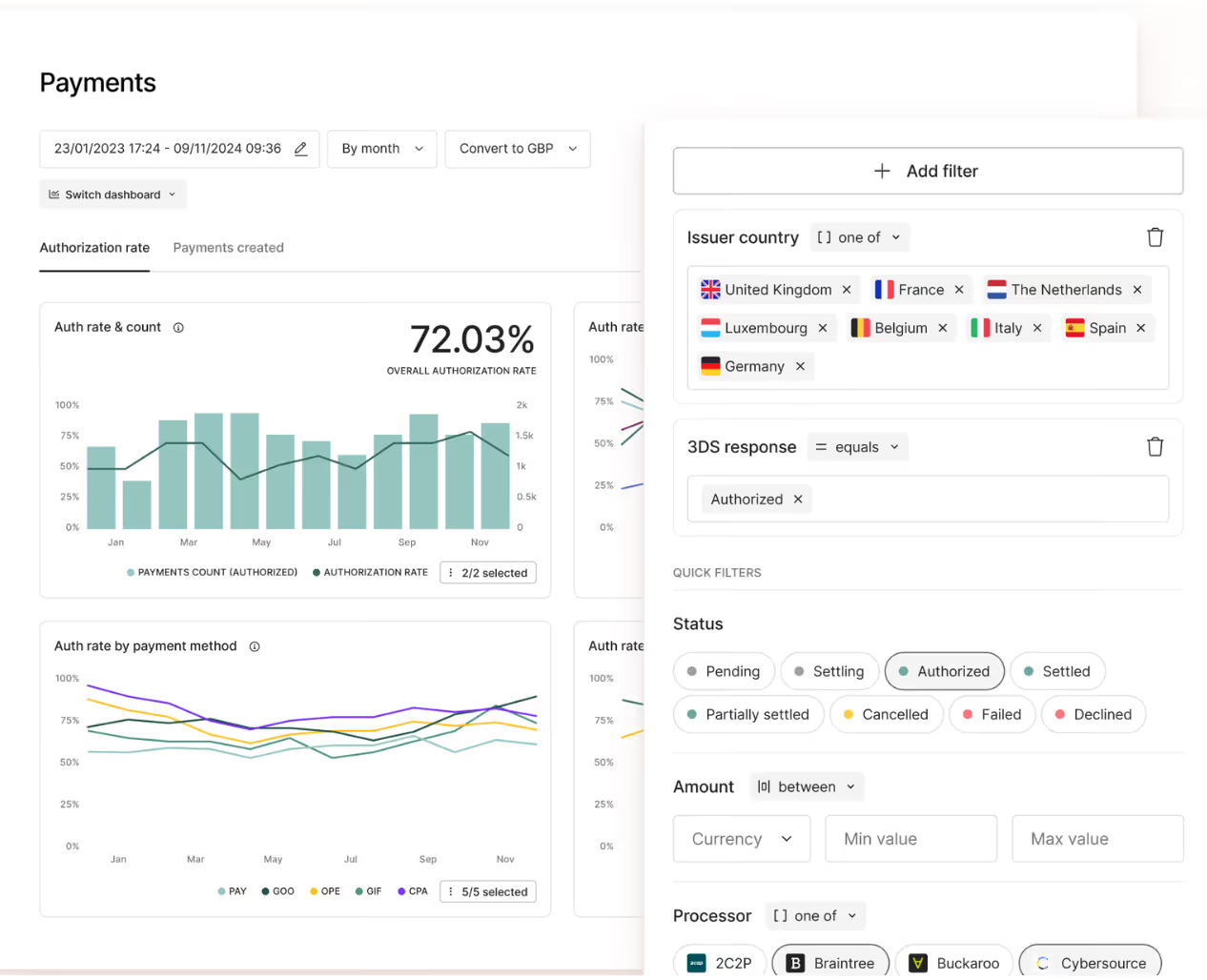
When you're processing hundreds of thousands of payments daily, this visibility is invaluable. You can quickly debug issues, compare authorization rates across providers, and identify which payment methods perform best in specific markets like Germany.
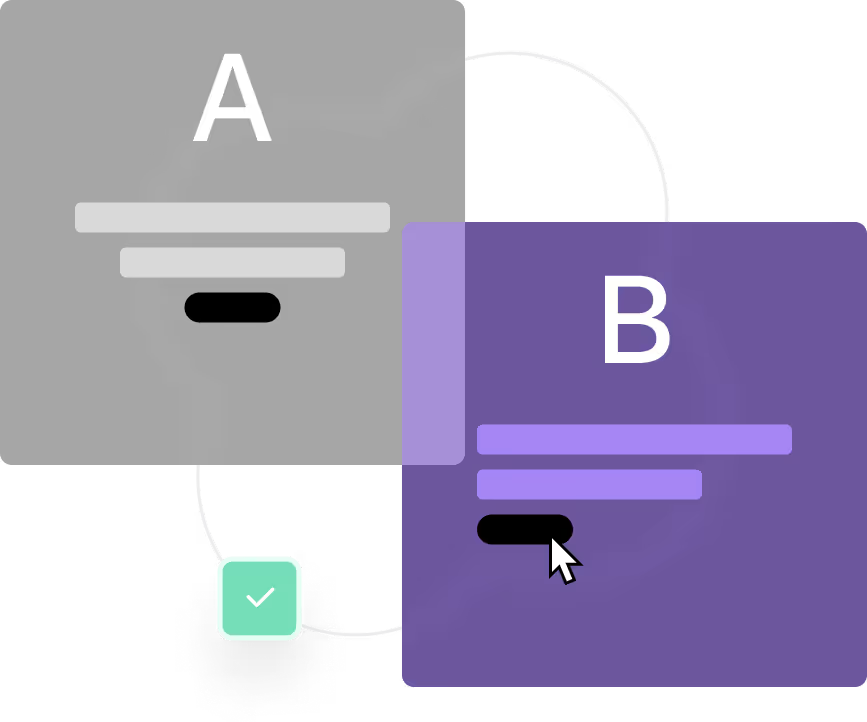
Observability also makes A/B testing straightforward. For instance, you can compare the performance of two processors in Germany by splitting traffic between them. The data you gather gives you leverage when negotiating contracts and helps you identify where you can save on fees. You can test routing logic, checkout flows, and more, all without custom development work.
The insights you gain help you continuously optimize. Maybe you discover that certain card BINs have lower authorization rates through one processor, or that mobile users in Germany prefer digital wallets. With unified data, these patterns become visible and actionable.
Reduce costs with Global Accounts
Global Accounts lets you manage accounts in 20+ countries and currencies from one place. Instead of being forced to convert currencies through your PSP (and paying conversion fees), you can collect and hold funds in local currencies.
This reduces cross-border fees and simplifies expansion. Once you've established your payment stack for Germany, scaling to other EU markets becomes significantly easier.
How CodesDirect scaled with Primer
Netherlands-based CodesDirect is a certified reseller of gift cards, prepaid credit, games, and software, serving customers across Europe, MENA, and beyond.
The company needed to accept a wide variety of payment methods to serve different markets, but their existing processors didn't offer the flexibility they needed. Adding new or niche payment methods required extensive workarounds and custom code. Every new integration meant more maintenance and more complexity.
After switching to Primer, CodesDirect could add new payment methods instantly, without developer resources. If one PSP doesn't have the method they need, they can source it from another using the same codebase. What once took months now takes minutes.
Since partnering with Primer, CodesDirect has seen 165% total payment volume growth, using 14 payment methods across 12 regions.
Read the full case study: How CodesDirect took control of their payments with Primer
Build your German payment stack the easy way
Germany represents a massive opportunity for merchants willing to meet local payment preferences. PayPal is essential. Klarna and BNPL options are expected. SEPA Direct Debit serves subscription businesses well. Cards and digital wallets round out the mix.
The smart approach isn't to build and maintain each integration yourself. With Primer, you can add the payment methods German customers expect, customize your checkout for different segments, and unify your payment data without draining engineering resources.
Book a call to start controlling every transaction end-to-end with Primer.
Frequently asked questions (FAQ): Online payment methods in Germany
What are the must-have payment methods for ecommerce in Germany?
For most merchants, the baseline payment methods include PayPal, BNPL, SEPA Direct Debit, cards, and digital wallets (Apple Pay/Google Pay). The goal isn’t “offer everything,” but instead to cover the methods German shoppers expect to see at checkout so you don’t lose conversion on payment preference alone.
Why is PayPal so important for ecommerce in Germany?
PayPal is deeply trusted by German consumers because it allows them to pay without sharing bank or card details directly with merchants. Buyer protection, dispute handling, and brand familiarity make it feel safer than cards for many shoppers.
Do I need multiple PSPs to accept payments in Germany?
Often, yes. Not all PSPs support every German payment method equally well, and some methods are only available through specific providers. As a result, merchants frequently end up working with multiple PSPs to offer the full set of options German customers expect.
Without orchestration, this creates operational complexity: multiple integrations, dashboards, contracts, and reporting formats. Payment orchestration platforms like Primer help solve this by allowing merchants to manage multiple PSPs and payment methods through a single integration.

%20(1).png)