
Best payment orchestrator in Malaysia
If you’re processing payments in Malaysia and expanding into neighboring ASEAN markets, the challenge is rarely just accepting cards.
Each market has its own preferred payment methods, processors, currencies, and payment behaviors. As your footprint grows, managing separate integrations for every provider can quickly make your payment stack harder to operate and slower to change.
A payment orchestration platform gives you a single layer for connecting providers, adding payment methods, controlling routing, and monitoring performance across markets.
In this post, we’ll look at what to consider when choosing the best payment orchestrator in Malaysia and how platforms like Primer can help businesses build a more flexible payments setup across Malaysia and Southeast Asia.
Learn more about how Primer works for payment orchestration.
Why payment orchestration matters for businesses in Malaysia
Malaysia sits within a highly fragmented regional payments landscape.
A payment setup that works well for customers in Malaysia may not be the right setup for Singapore, Indonesia, Thailand, or the Philippines. Different markets favor different wallets, bank transfer methods, acquirers, and processors.
For businesses operating across several ASEAN markets, this can create a few challenges:
- Every new PSP or payment method can require another engineering integration.
- Processor performance can vary significantly by market.
- Routing and fallback logic becomes harder to manage as the number of providers grows.
- Payment data is spread across different dashboards and reporting formats.
- Changes to your payment strategy can become dependent on engineering resources.
Payment orchestration addresses this by putting a control layer between your business and your payment providers.
Instead of building every connection and piece of payment logic separately, you can manage them through one platform.
What to look for in a payment orchestrator in Malaysia
If you’re choosing a payment orchestration platform for Malaysia or wider ASEAN expansion, these are some of the most important capabilities to consider.
Local and regional payment method coverage
Customers expect to pay using methods they already know and trust.
Your orchestration platform should make it easy to connect the payment methods and processors that matter in Malaysia, while also giving you room to expand into neighboring markets without rebuilding your checkout every time.
The broader your regional footprint becomes, the more valuable it is to manage those connections through a single integration.
Multi-processor routing
Using more than one processor gives you more flexibility over how transactions are handled.
A good orchestration platform should let you route payments according to factors such as:
- Customer location
- Issuing country
- Currency
- Card type
- Transaction value
- Payment method
- Processor performance
That means your payments team can adapt routing by market instead of sending every transaction through the same provider.
Automated retries and fallbacks
Processor outages and temporary declines should not automatically become lost sales.
Payment orchestration can allow failed transactions to retry through another processor according to rules you define.
This becomes particularly important for businesses processing high transaction volumes or operating across several markets, where relying on a single processor creates an unnecessary point of failure.
Unified payment performance data
Once you use several PSPs, understanding how they perform becomes harder.
Each provider may use different reporting formats, definitions, dashboards, and settlement files.
Your orchestration platform should give you a consolidated view of authorization rates, payment failures, processor performance, and costs so your team can make decisions using comparable data.
No-code payment configuration
Payments teams should not need to open an engineering ticket every time they want to change a route, test a provider, or adjust payment logic.
Look for platforms that allow teams to configure routing and payment flows without writing code, while still giving engineers the flexibility they need for more complex implementations.
Cost and currency visibility
FX and processing fees still matter, particularly when you operate across several ASEAN currencies, but they should be considered alongside payment performance.
The cheapest processor is not necessarily the best option if it produces lower authorization rates or creates additional operational work.
Ideally, your orchestration platform should help you understand both cost and performance in one place.
Why merchants choose Primer for payment orchestration in Malaysia
Primer is a Unified Payment Infrastructure platform that sits between merchants and their payment providers.
It gives payments teams a single place to connect processors, manage payment logic, monitor performance, and expand their payment setup across markets.
Here’s how Primer can support businesses operating in Malaysia and across ASEAN:
- Workflows: Build routing, retry, and fallback logic without code. Transactions can be routed according to criteria such as issuing country, currency, payment method, or transaction value, allowing different ASEAN markets to use different processing strategies.
- Provider and payment method connections: Add supported processors and payment methods without building every connection from scratch. This makes it easier to adapt your payment setup as you enter new markets.
- Automated fallbacks: If one processor cannot complete a payment, transactions can be routed to another connected provider according to the logic you define.
- Processor-agnostic payment infrastructure: Primer helps reduce dependency on individual processors, giving you more flexibility to change providers or distribute payment volume as your strategy evolves.
- Costs Overview: Consolidates processor cost data into a consistent format, making it easier to understand what different providers are costing you across markets and currencies.
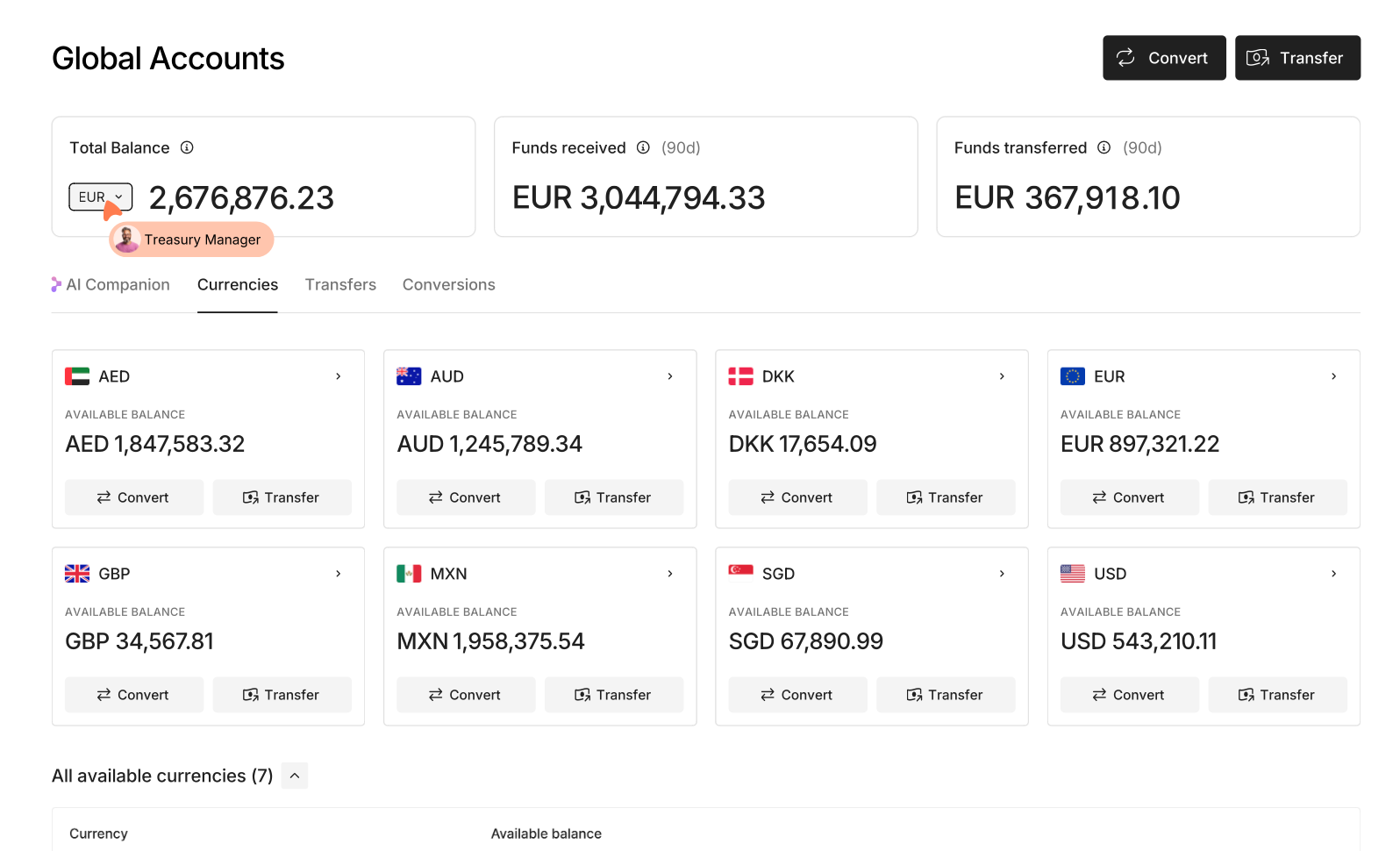
- Global Accounts: Gives businesses additional flexibility over how they collect, hold, and move funds across currencies, which can help simplify multi-market payment operations.
Together, these capabilities mean your payments team can spend less time maintaining integrations and more time improving how payments perform.
Book a demo to see how Primer can help you manage processors, routing, payment methods, and multi-market payment operations across Malaysia and ASEAN.
Frequently asked questions (FAQs) about payment orchestrators in Malaysia
What does a payment orchestrator do?
A payment orchestrator connects your business to multiple processors, payment methods, and other payment services through a single platform.
It can also control how transactions are routed, manage retries and fallbacks, and bring payment data from multiple providers into one place.
Do you need multiple payment processors in Malaysia?
Not necessarily.
A single processor may be sufficient for businesses with simple domestic payment flows. Using multiple processors becomes more useful when you want redundancy, better performance across different markets, access to additional payment methods, or more control over payment costs.
Payment orchestration makes managing those providers easier by reducing the need to maintain each integration separately.
Can payment orchestration help businesses expand across ASEAN?
Yes.
Instead of building a new payments stack for every market, an orchestration platform can give you a common infrastructure for connecting local processors and payment methods, configuring routing, and monitoring performance.
That can make it faster and easier to adapt your payment setup when entering markets such as Singapore, Indonesia, Thailand, or the Philippines.
Can payment orchestration improve payment performance?
It can.
Using multiple processors gives you the ability to route transactions differently depending on market, card type, payment method, or other transaction characteristics.
You can also use fallbacks to recover eligible payments when the first processor cannot complete the transaction.
The impact depends on the providers you use and how your routing strategy is configured.
Can payment orchestration help reduce payment costs?
Yes, but cost is only one part of the value.
An orchestration platform can give you visibility into processor fees, FX costs, and payment performance across providers. It can also help you route transactions according to your commercial priorities.
The goal is not simply to choose the cheapest processing route, but to balance cost, authorization performance, resilience, and customer experience.